Tax Resolution Services · Verified Directory
Tax Resolution Services — Settle IRS Debt, Stop Levies, Get Compliant
If you owe back taxes, missed filings, or just received an IRS notice, you have options — and a strict timeline. CPAZenith matches you with licensed tax-resolution pros who handle installment agreements, offers in compromise, penalty abatement, and audit representation every week.
Problems we solve
Common tax problems we solve
Tax issues rarely fix themselves. A tax resolution specialist reviews your situation, files missing returns, and negotiates the best path forward with the IRS or state agencies.
- You owe back taxes to the IRS or state
- You received a notice or lien and are not sure what to do
- Payroll taxes were not filed or paid correctly
- Previous returns contain errors or missing deductions
- You need a payment plan or offer in compromise
- An audit or examination is pending
- You are not confident your books are tax-ready
What's included
What tax resolution covers
IRS notice triage
We decode every CP, LT, and Letter — and tell you what's actually urgent vs. boilerplate.
Installment agreements
Guaranteed, streamlined, and partial-pay IAs structured around your actual cash flow.
Offer in compromise
Full Form 656 + 433-A(OIC) preparation with realistic acceptance modeling before you file.
Penalty abatement
First-time abatement and reasonable-cause requests for failure-to-file and failure-to-pay penalties.
Audit representation
Power of attorney engagement — we deal with the examiner so you don't have to.
Back-tax compliance
Reconstruct and file 6+ years of unfiled returns to get you into resolution-eligible status.
IRS notices handled
Decode the letter — and the deadline
| Notice | What it means | Next step |
|---|---|---|
CP14 Balance due — first notice | The IRS says you owe tax. Interest and the failure-to-pay penalty are already accruing. | Verify the balance against your return, then pay, request an installment agreement, or dispute within 60 days. |
CP2000 Underreporter — income mismatch | Third-party documents (1099s, W-2s, K-1s) don't match what you filed. Not an audit — yet. | Respond by the deadline with corrected figures or supporting docs. Ignoring it triggers a statutory notice of deficiency. |
CP504 Final notice of intent to levy state refund | Account is in collections. The IRS can levy state tax refunds and will pursue further collection action. | Open a collections case: installment agreement, currently not collectible, or offer in compromise. |
LT11 / Letter 1058 Final notice of intent to levy — 30 days | The IRS can levy wages, bank accounts, and seize assets after 30 days. Triggers your CDP hearing rights. | File Form 12153 within 30 days to request a Collection Due Process hearing and pause levy action. |
Letter 525 / 915 Examination report (audit results) | Audit findings proposing changes. You have 30 days to agree, disagree, or request Appeals. | Get representation before responding. Appeals is almost always preferable to Tax Court if you disagree. |
Notice CP90 / CP297 Notice of levy on federal payments | IRS will levy Social Security, federal contractor payments, or other federal benefits. | Same 30-day CDP window. A pro can negotiate a collection alternative and request levy release. |
Resolution paths
Back taxes, installment agreements, OIC, penalty abatement & more
Back taxes & unfiled returns
File the last 6 years of missing returns first — the IRS won't entertain any resolution until you're compliant.
- Pull wage & income transcripts to reconstruct missing data
- File substitute returns over IRS-prepared SFRs (almost always lowers the balance)
- Stop the failure-to-file penalty (5% per month, capped at 25%)
Installment agreements
Monthly payment plans for taxpayers who can't pay in full but can pay over time.
- Guaranteed (under $10K) and streamlined (under $50K) plans skip financial disclosure
- Partial-pay installment agreement (PPIA) for balances you can't fully pay before CSED
- Setup fee waived or reduced for low-income taxpayers
Offer in compromise (OIC)
Settle for less than owed when reasonable collection potential is below the balance.
- Doubt as to collectibility — the most common path
- Calculated as net realizable equity + future income (12–24 mo. multiplier)
- About 30–40% acceptance rate nationally; far higher with proper Form 433 preparation
Penalty abatement
Reduce or remove failure-to-file, failure-to-pay, and accuracy-related penalties.
- First-Time Abatement (FTA) — automatic if clean compliance history for prior 3 years
- Reasonable cause — illness, natural disaster, reliance on a preparer, records destroyed
- Statutory exceptions for erroneous IRS written advice (Form 843)
Audit representation
Power of attorney (Form 2848) puts a licensed pro between you and the IRS examiner.
- Correspondence, office, and field audits — including TCMP and EITC exams
- Appeals representation if you disagree with the examination report
- Tax Court petition prep when settlement isn't possible
Currently Not Collectible (CNC)
Temporary collection hold when paying anything would create financial hardship.
- Stops levies and garnishments while in status 53
- Requires Form 433-F or 433-A financial disclosure
- CSED clock keeps running — balance can expire while in CNC
Who you hire matters
CPA vs Enrolled Agent vs Tax Attorney
| Type | Scope of practice | Best for | Typical cost |
|---|---|---|---|
| CPA | Unlimited IRS representation. Strongest on tax planning, business returns, and complex accounting. | Business owners, multi-entity filers, anyone whose case crosses tax + accounting + financial statements. | $200–$450/hr; $2K–$10K typical resolution engagement |
| Enrolled Agent (EA) | Federally licensed by the IRS, unlimited representation rights. Tax-only focus. | Personal collections cases, installment agreements, OIC, audit representation when no litigation risk. | $150–$300/hr; $1.5K–$6K typical resolution engagement |
| Tax Attorney | Licensed lawyer with tax specialty. Attorney-client privilege. Required for Tax Court litigation. | Criminal exposure (eggshell audits), foreign accounts (FBAR), Tax Court cases, complex appeals. | $350–$700/hr; $7.5K–$25K+ for litigation matters |
When to hire tax resolution help
Signals you shouldn't go it alone
- You owe more than $10,000 in back taxes
- You received a CP504, LT11, or Letter 1058 (levy is imminent)
- You haven't filed returns for two or more years
- You're being audited — especially a field or office audit
- The IRS has already levied wages, a bank account, or filed a federal tax lien
- You're considering an Offer in Compromise and want it done right the first time
- You disagree with an examination report and need to file Appeals
- Payroll tax (941) liability — Trust Fund Recovery Penalty risk to officers personally
Documents to prepare
What to gather before your first call
- Every IRS notice or letter received (front and back)
- Last 3 years of filed tax returns
- Wage & income transcripts (we can pull these via POA)
- Bank statements — last 3 months
- Pay stubs or P&L for self-employed (last 3 months)
- List of monthly living expenses (Form 433 categories)
- Asset list — home, vehicles, retirement accounts, business equity
- Form 2848 Power of Attorney (we prepare this)
FAQ
Common questions
How much do tax resolution services cost?
Most cases fall between $1,500 and $7,500 depending on complexity. Simple installment agreements run $750–$1,500. OIC engagements typically run $3,500–$7,500. Complex audit defense or criminal-exposure matters run higher. Anyone quoting a flat $5,000+ before reviewing your transcripts is selling, not advising.
Can the IRS really settle for less than I owe?
Yes — through an Offer in Compromise — but only when your reasonable collection potential (assets + future income) is less than the balance. Acceptance rates run 30–40% nationally and far higher with properly prepared 433-A(OIC) financials. A pro will model whether you qualify before you spend money applying.
How long do I have to respond to an IRS notice?
It depends on the notice. CP2000 typically gives 30 days. LT11 / Letter 1058 (final notice of intent to levy) gives 30 days to request a Collection Due Process hearing. CP14 gives 21 days before late-payment penalties kick in. Don't let any IRS letter sit past 10 days unopened.
Will the IRS take my house or paycheck?
The IRS rarely seizes primary residences but will levy wages and bank accounts after a final notice. Wage levies are continuous — they keep taking until the balance is paid or a resolution is in place. A properly filed installment agreement, CNC status, or pending OIC stops most collection action.
How to choose
How to choose a tax-resolution professional
Use these criteria to compare candidates side by side and avoid the most common hiring mistakes.
Industry concentration
Ask how many clients in your industry they currently serve. Generalists miss niche credits, filings, and software conventions.
Credentials and licensure
Verify active CPA license, Enrolled Agent status, or relevant certifications (QuickBooks ProAdvisor, Xero Partner, AFSP).
Software stack
Confirm they work in your existing platforms — QuickBooks Online, Xero, Gusto, Sage Intacct — rather than forcing a migration.
Engagement scope and SLAs
Get a written engagement letter that lists deliverables, monthly close date, response times, and what is and isn't included.
Pricing transparency
Prefer fixed monthly fees over open-ended hourly billing for recurring work. Ask what triggers a price increase.
References and reviews
Ask for 2–3 current client references in your industry, plus check independent reviews and state-board status.
Find IRS tax help
Tell us about your situation in 90 seconds. We'll match you with up to 3 verified tax-resolution pros — free, no obligation.
IRS tax resolution
Behind on taxes or facing an IRS notice?
Talk to a tax resolution specialist about installment agreements, offers in compromise, wage garnishment, and audit defense.
Tax resolution
Request Tax Help
Share a few details — a vetted tax pro will reach out within one business day.
How they compare
Tax Preparation vs Tax Resolution
Tax prep is compliance for the current year. Tax resolution is the specialty of untangling back taxes, IRS notices, liens, and audits.
| Consideration | ComplianceTax Preparation | SpecialtyTax Resolution |
|---|---|---|
| Goal | File an accurate, on-time return | Resolve back taxes, notices, liens, or audits |
| Who does it | CPA, EA, or tax preparer | CPA, EA, or tax attorney with resolution experience |
| Typical work | 1040, 1120, 1120-S, 1065, state returns | Installment agreements, OIC, penalty abatement, audit defense |
| Pricing | $300–$5,000+ per return | $1,500–$15,000+ per case |
| Timeline | Weeks | 3–12+ months |
| Best for | Anyone with a current-year return to file. | Anyone with unfiled returns, IRS letters, or balances they can't pay. |
Bottom line: If you owe back taxes or received a notice, you need resolution — not just preparation.
Advisor-grade guides
Downloadable ebooks & templates
CPA-ready playbooks and templates you can use today — instant downloads, no signup required.
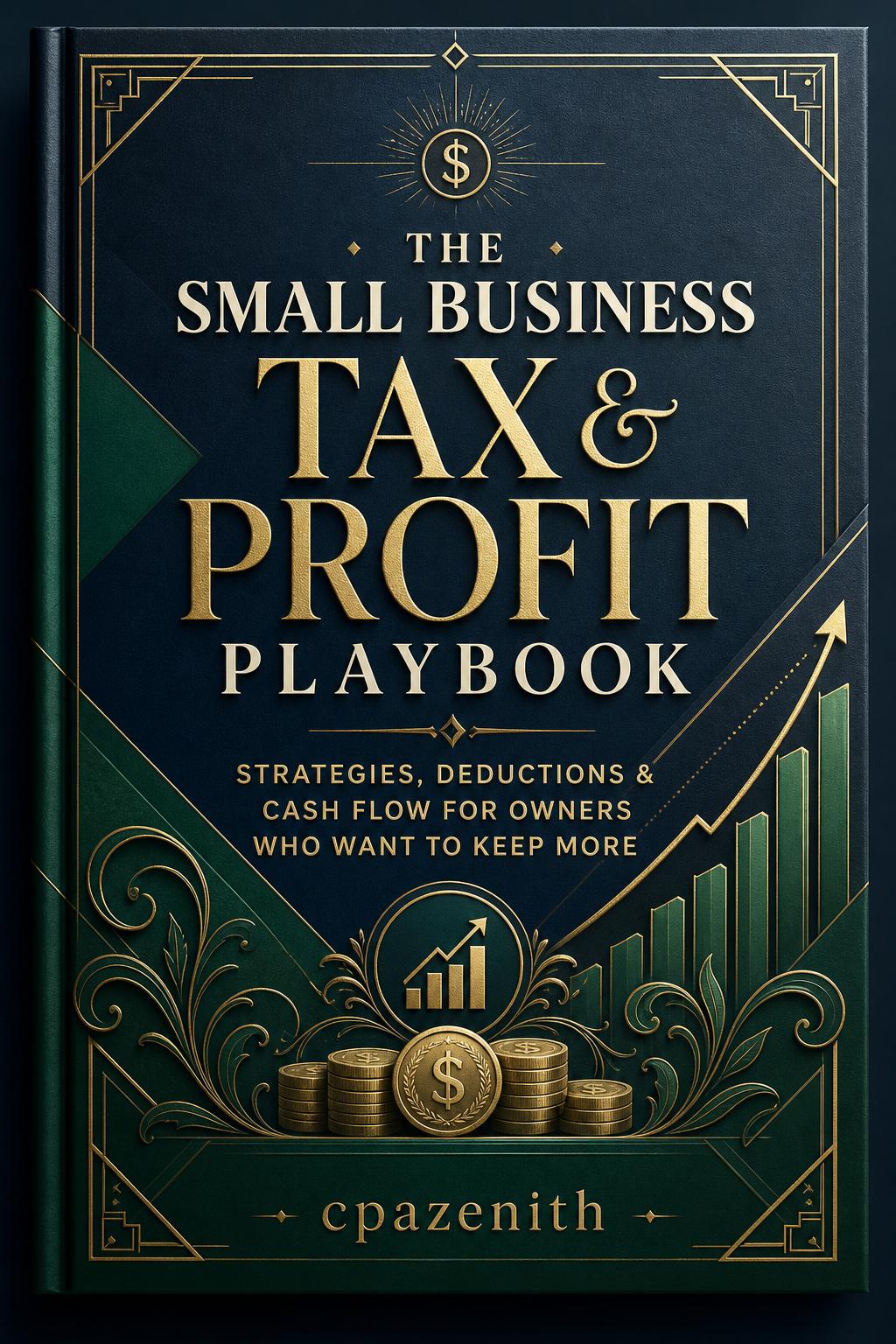
The Small Business Tax & Profit Playbook
A CPA-ready guide to deductions, quarterly taxes, S-Corp strategy, owner pay, cash flow, and year-round tax planning.
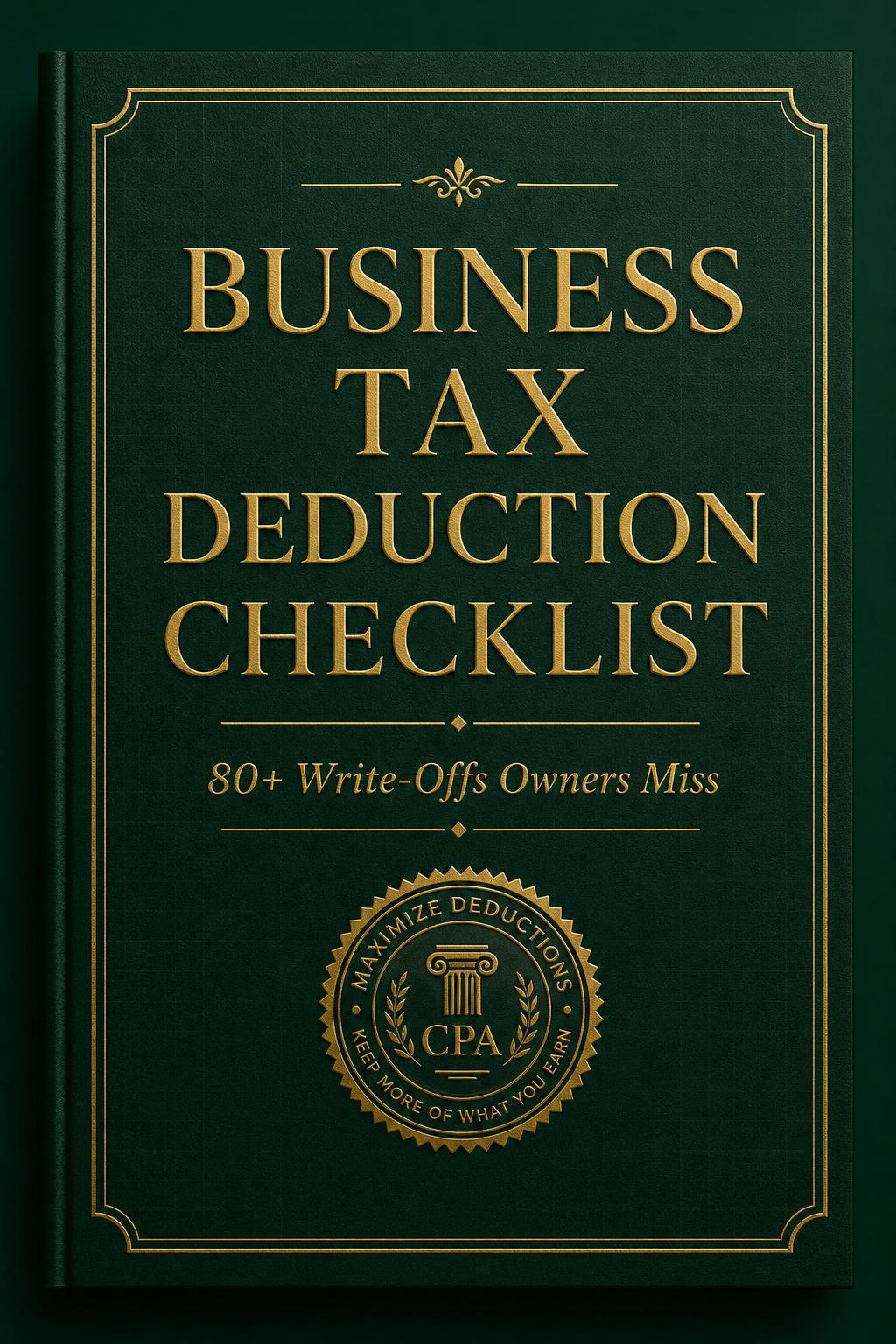
Business Tax Deduction Checklist
A CPA-curated checklist of 80+ business deductions most owners miss — organized by category so you can sweep it before filing.
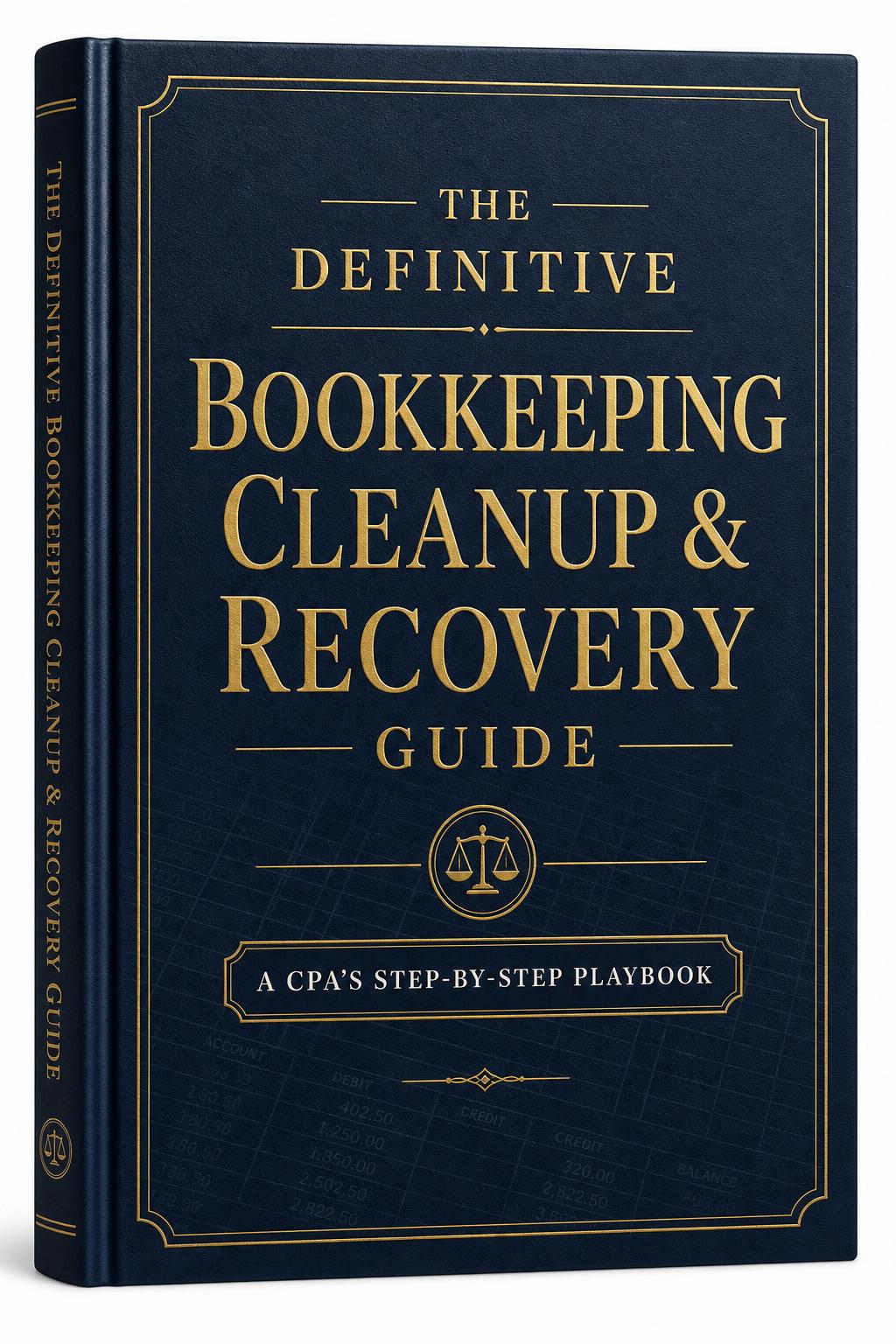
The Definitive Bookkeeping Cleanup & Recovery Guide
The CPA's step-by-step playbook for diagnosing messy books, reconstructing missing history, and restoring a clean, audit-ready ledger.

The Freelancer Tax Guide
The practical tax playbook for freelancers, contractors, and solo creatives — deductions, quarterly estimates, and self-employment strategies.

The Year-End Tax Planning Guide
The CPA's December playbook — practical strategies to reduce your tax bill before the year closes.

The Premium Bookkeeping Template Pack
Automated dashboards, multi-account reconciliations, and CPA-ready reporting workbooks for serious owners and bookkeepers.

Tax & Bookkeeping Resource Library
Our complete advisor-grade collection — every premium asset an owner needs to run clean books, lower taxes, and recover messy ledgers, in one bundle.