Choose the right provider
Compare accounting services side-by-side
Not sure which type of provider you need? These plain-English comparisons show what each role actually does, what it costs, and who it fits best.
How they compare
Bookkeeper vs Accountant
Both keep your finances healthy, but they operate at different altitudes. Bookkeepers keep the record accurate day-to-day; accountants (and CPAs) turn those records into tax filings, strategy, and assurance.
| Consideration | TransactionalBookkeeper | AdvisoryAccountant / CPA |
|---|---|---|
| Primary role | Records daily transactions and reconciles accounts | Analyzes, files taxes, and advises on strategy |
| Credentials | No license required (QBO ProAdvisor common) | CPA, EA, or degreed accountant |
| Typical output | Clean books, monthly reconciliations, A/P & A/R | Financial statements, tax returns, tax planning |
| Pricing | $300–$1,500/month | $150–$450/hr or $2k–$15k/return |
| When you need one | You have transactions to categorize and reconcile | You need taxes filed, audited books, or strategy |
| Best for | Small businesses that need clean, current books each month. | Businesses needing tax filings, planning, or advisory work. |
Bottom line: Most growing businesses use both — a bookkeeper monthly, a CPA quarterly or at year-end.
How they compare
QuickBooks Consultant vs QuickBooks Bookkeeper
A consultant sets up or fixes QuickBooks; a bookkeeper runs it every month. The consultant is a scalpel for setup, cleanup, and migrations. The bookkeeper is your ongoing operator.
| Consideration | ProjectQuickBooks Consultant | OngoingQuickBooks Bookkeeper |
|---|---|---|
| Engagement | One-time or short project | Monthly recurring service |
| Typical work | Setup, chart-of-accounts design, cleanup, migration, integrations | Categorization, reconciliations, A/P, A/R, monthly close |
| Certification | Certified QuickBooks ProAdvisor common | ProAdvisor helpful but not required |
| Pricing | $150–$300/hr or $2k–$10k project | $300–$1,500/month |
| Output | A working QuickBooks file you can operate | Clean books and monthly reports you can act on |
| Best for | Businesses starting fresh, migrating, or fixing a broken file. | Businesses whose QuickBooks file is stable and needs monthly upkeep. |
Bottom line: Hire a consultant to build it right, then hand the file to a bookkeeper to run it monthly.
How they compare
Controller vs CFO
Controllers own the accuracy of what happened. CFOs own what should happen next. Growing companies typically add a controller first, then a fractional CFO once strategy questions get harder than close questions.
| Consideration | OperationalController | StrategicCFO |
|---|---|---|
| Focus | Accurate historical financials and controls | Forecasting, fundraising, KPIs, board strategy |
| Owns | Monthly close, GAAP compliance, audit prep | Budgets, cash strategy, capital allocation, investor reporting |
| Typical revenue range | $1M–$25M+ | $3M–$100M+ (or pre-revenue with funding) |
| Pricing (fractional) | $2k–$6k/month | $3k–$12k/month |
| Reports to | CFO or owner | CEO, board, and investors |
| Best for | Companies whose books are unreliable or slow to close. | Companies fundraising, planning, or scaling past the owner's spreadsheet. |
Bottom line: If the close is late, hire a controller. If the strategy is unclear, hire a CFO. Many companies need both.
How they compare
Tax Preparation vs Tax Resolution
Tax prep is compliance for the current year. Tax resolution is the specialty of untangling back taxes, IRS notices, liens, and audits.
| Consideration | ComplianceTax Preparation | SpecialtyTax Resolution |
|---|---|---|
| Goal | File an accurate, on-time return | Resolve back taxes, notices, liens, or audits |
| Who does it | CPA, EA, or tax preparer | CPA, EA, or tax attorney with resolution experience |
| Typical work | 1040, 1120, 1120-S, 1065, state returns | Installment agreements, OIC, penalty abatement, audit defense |
| Pricing | $300–$5,000+ per return | $1,500–$15,000+ per case |
| Timeline | Weeks | 3–12+ months |
| Best for | Anyone with a current-year return to file. | Anyone with unfiled returns, IRS letters, or balances they can't pay. |
Bottom line: If you owe back taxes or received a notice, you need resolution — not just preparation.
How they compare
Outsourced Bookkeeping vs In-House Bookkeeper
Outsourcing gets you a team and tech stack for the cost of a part-time hire. In-house gets you dedicated hours and tighter operational integration — with the full employer cost.
| Consideration | FractionalOutsourced Bookkeeping | EmployeeIn-House Bookkeeper |
|---|---|---|
| Monthly cost | $300–$2,500/month | $4,500–$7,500/month (fully loaded) |
| Coverage | Team-based, no PTO gaps | Single point of failure during PTO/turnover |
| Software | Modern stack included | You buy and maintain |
| Best fit revenue | <$10M or up to ~500 monthly transactions | $10M+ or complex operations |
| Ramp time | 1–2 weeks | 60–90 days to hire and train |
| Best for | Small businesses that want clean books without hiring. | Larger companies needing dedicated in-office presence and control. |
Bottom line: Most SMBs under $10M in revenue save real money outsourcing — and get better internal controls.
How they compare
Fractional CFO vs Virtual CFO
The terms overlap. In practice, fractional CFOs work part-time with a small portfolio of clients, often onsite. Virtual CFOs work remotely and typically serve more clients across more geographies.
| Consideration | Part-timeFractional CFO | RemoteVirtual CFO |
|---|---|---|
| Delivery | Hybrid — often onsite monthly | Fully remote via video and shared dashboards |
| Time commitment | 20–60 hours/month per client | 5–30 hours/month per client |
| Client load | 2–6 companies | 6–20 companies |
| Pricing | $4k–$12k/month | $1.5k–$6k/month |
| Best deliverables | Fundraising, exit prep, board reporting | KPI dashboards, monthly reviews, forecasting |
| Best for | Companies raising capital, preparing for exit, or in a heavy strategic phase. | Steady-state companies that need ongoing financial visibility on a lean budget. |
Bottom line: Pick fractional for hands-on strategy engagements; pick virtual for lean, recurring financial leadership.
How they compare
Forensic Accounting vs Audit
Forensic accountants dig into disputes, fraud, or damages. Auditors attest to whether your financial statements are fairly presented. One is investigative and often adversarial; the other is independent assurance for stakeholders.
| Consideration | InvestigativeForensic Accounting | AssuranceAudit |
|---|---|---|
| Goal | Find facts, quantify losses, or detect fraud | Issue an independent opinion on financial statements |
| When you need it | Dispute, litigation, suspected fraud, divorce, insurance claim | Lender, investor, board, or regulatory requirement |
| Who performs it | CPA with forensic accounting or fraud-examination credentials (CFE, CFF) | Independent CPA firm under PCAOB or AICPA standards |
| Typical output | Expert report, damage calculation, fraud findings, trial testimony | Audit opinion letter (unqualified, qualified, adverse, disclaimer) |
| Pricing | $250–$500+/hour or fixed-fee per engagement | $10k–$100k+ depending on entity size and complexity |
| Relationship | Hired by one party in a dispute or investigation | Independent of the company being audited |
| Best for | Businesses, attorneys, or individuals facing fraud, litigation, or a financial dispute. | Companies that need independent assurance for lenders, investors, or regulators. |
Bottom line: If you need to prove or disprove a financial claim, hire a forensic accountant. If you need independent verification of your financial statements, hire an auditor.
How they compare
Construction CPA vs General CPA
A general CPA can file your return. A construction CPA runs job costing, WIP schedules, and Section 460 tax planning — the work that determines whether your surety increases your bonding capacity and whether your job profit reports mean anything.
| Consideration | SpecialistConstruction CPA | GeneralistGeneral CPA |
|---|---|---|
| Job costing | Phase- and cost-code-level tracking built into monthly close | Rarely offered; books stay at the entity level |
| WIP schedules | Surety-grade percentage-of-completion WIP produced monthly or quarterly | Not typically produced |
| Tax method | Section 460, look-back interest, and the small-contractor exemption applied correctly | Often defaults to cash basis without evaluating PCM requirements |
| Payroll | Certified payroll, prevailing wage, and union fringe remittance handled | Standard W-2/1099 payroll only |
| Software | QuickBooks Contractor, Foundation, Sage 100/300, Procore, Buildertrend | QuickBooks Online or Desktop, generic setup |
| Best for | GCs, subs, and developers who need bonding-grade financials and job-level profit visibility. | Businesses without job costing, bonding, or percentage-of-completion requirements. |
Bottom line: If you bond work, run multiple open jobs, or need WIP schedules a surety will accept, a construction CPA pays for itself. For a single-job handyman LLC, a general CPA may be enough.
How they compare
Real Estate CPA vs General CPA
A general CPA files your Schedule E. A real estate CPA runs cost segregation, coordinates 1031 exchanges, and qualifies clients for Real Estate Professional Status — the planning that actually moves the tax bill on a rental portfolio.
| Consideration | SpecialistReal Estate CPA | GeneralistGeneral CPA |
|---|---|---|
| Depreciation strategy | Cost segregation studies and Form 3115 catch-up applied proactively | Straight-line depreciation only; cost seg rarely raised |
| 1031 exchanges | Identification-window modeling and QI coordination handled directly | Limited exposure; may miss boot or timing issues |
| REPS & passive losses | 750-hour test, material participation, and aggregation elections applied correctly | Passive loss rules often applied generically |
| Entity & K-1s | Partnership returns, syndication K-1s, and multi-state filings handled in-house | May outsource or decline complex partnership work |
| Software | AppFolio, Buildium, Stessa, and per-property class tracking | Generic QuickBooks setup without per-property tagging |
| Best for | Landlords, syndicators, flippers, and developers who want to actively minimize tax on a growing portfolio. | Owners of a single rental with straightforward Schedule E needs and no near-term sale or exchange. |
Bottom line: If you own more than one property, are considering cost segregation, a 1031 exchange, or REPS, a real estate CPA's planning typically outweighs the fee difference. A general CPA can still handle one straightforward rental.
Still not sure which one you need?
Answer a few quick questions and we'll match you with the right kind of accounting or advisory professional.
Talk to a specialist
Need help with accounting, bookkeeping, tax, CFO, or QuickBooks support?
Get matched with accounting, bookkeeping, tax, CFO, or QuickBooks support for your business.
Advisor-grade guides
Downloadable ebooks & templates
CPA-ready playbooks and templates you can use today — instant downloads, no signup required.
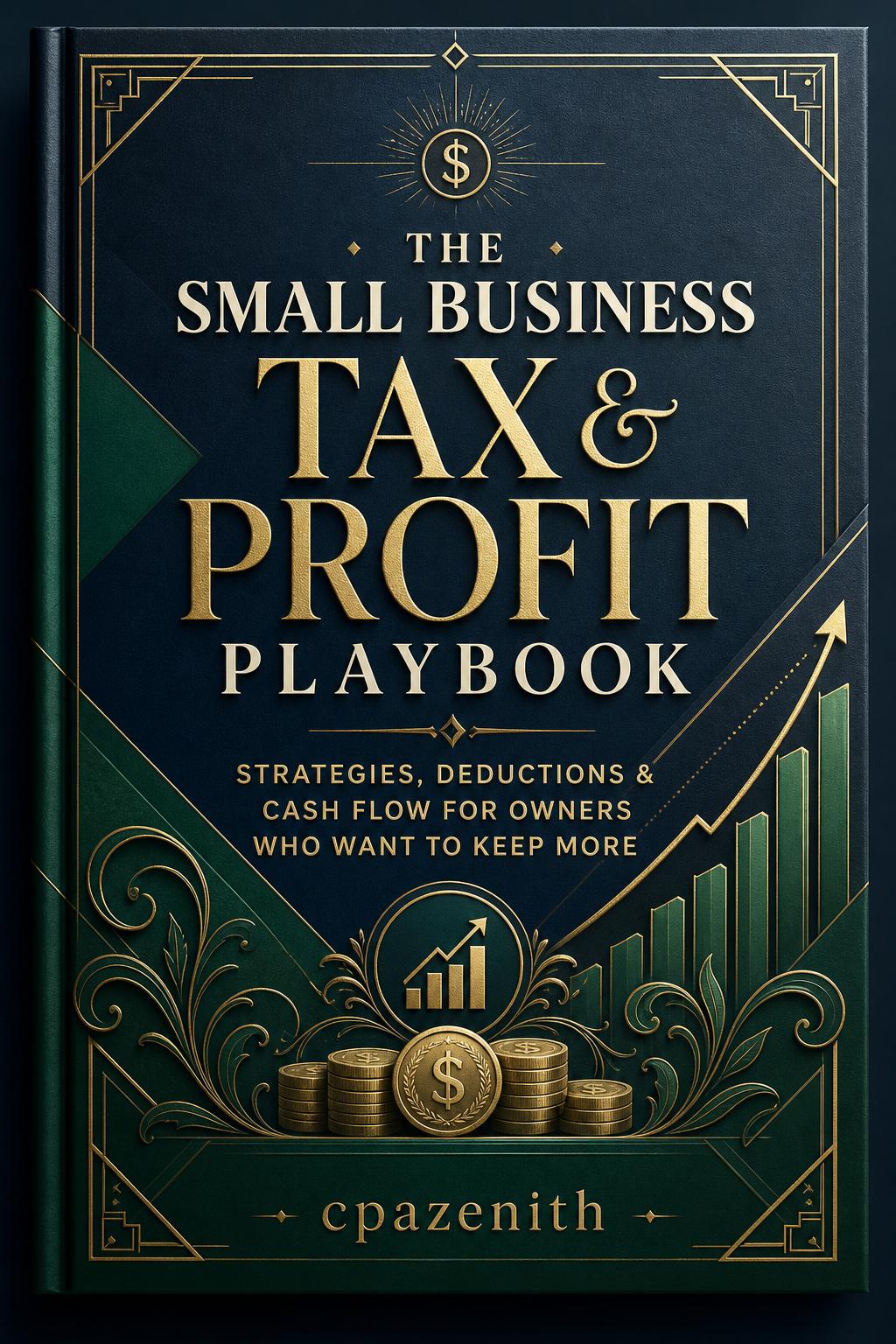
The Small Business Tax & Profit Playbook
A CPA-ready guide to deductions, quarterly taxes, S-Corp strategy, owner pay, cash flow, and year-round tax planning.
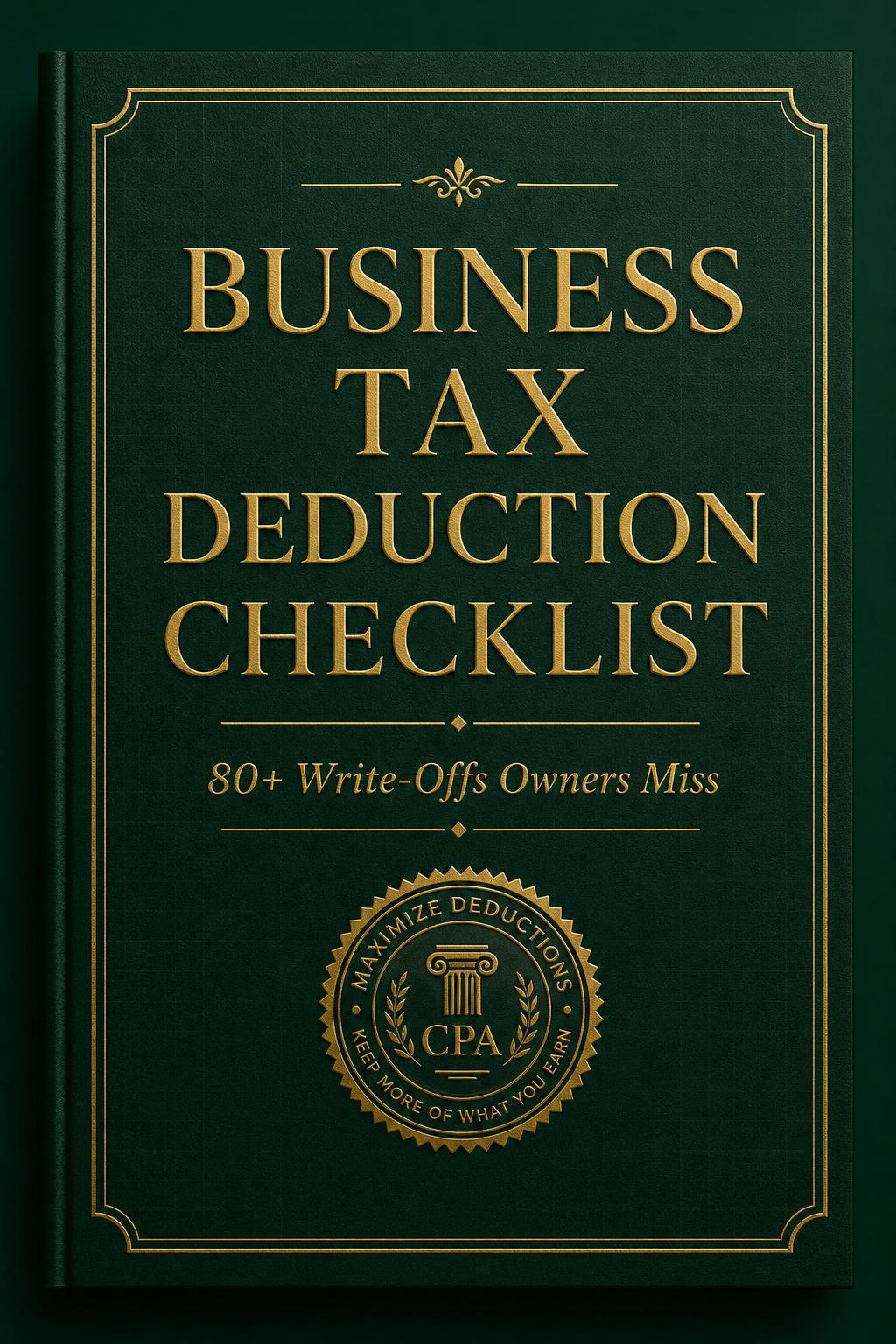
Business Tax Deduction Checklist
A CPA-curated checklist of 80+ business deductions most owners miss — organized by category so you can sweep it before filing.
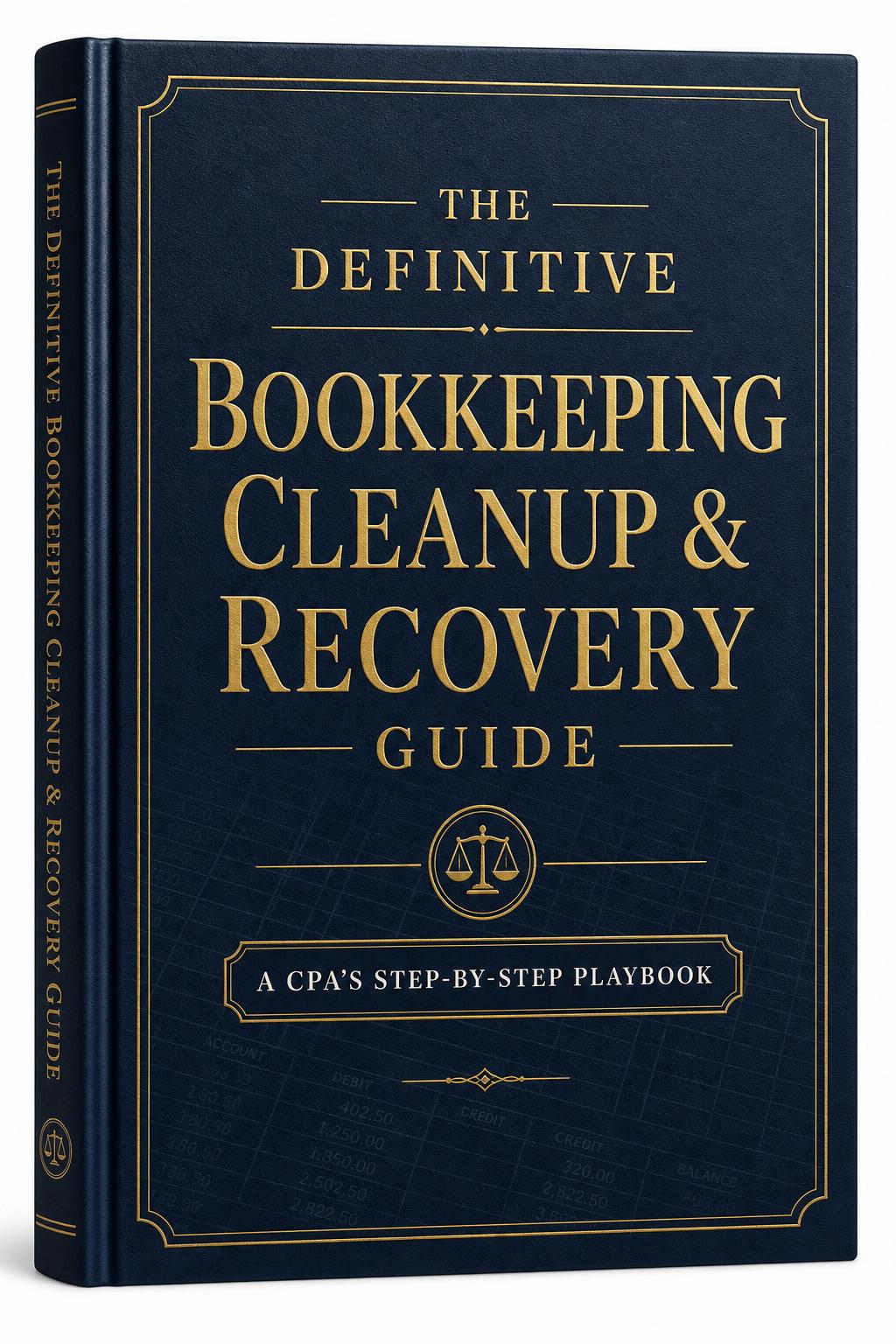
The Definitive Bookkeeping Cleanup & Recovery Guide
The CPA's step-by-step playbook for diagnosing messy books, reconstructing missing history, and restoring a clean, audit-ready ledger.

The Freelancer Tax Guide
The practical tax playbook for freelancers, contractors, and solo creatives — deductions, quarterly estimates, and self-employment strategies.

The Year-End Tax Planning Guide
The CPA's December playbook — practical strategies to reduce your tax bill before the year closes.

The Premium Bookkeeping Template Pack
Automated dashboards, multi-account reconciliations, and CPA-ready reporting workbooks for serious owners and bookkeepers.

Tax & Bookkeeping Resource Library
Our complete advisor-grade collection — every premium asset an owner needs to run clean books, lower taxes, and recover messy ledgers, in one bundle.