Bookkeeping Packages
Bookkeeping Packages & Pricing
Compare monthly bookkeeping packages — Starter, Growth, and Premium tiers with typical pricing, scope, software, and add-ons for small businesses.
Need help with bookkeeping, QuickBooks, tax, or CFO support? Tell us what service you need and where your business is located.
Request a ConsultationUse these packages as a benchmark when comparing quotes. Most outsourced bookkeepers tier pricing by transaction volume, account count, and whether your books are cash or accrual — the Starter / Growth / Premium structure below matches what 80% of providers actually offer.
Problems we solve
Common bookkeeping problems we solve
Most businesses reach out when the books are falling behind. A professional bookkeeper cleans up the mess and keeps your records tax-ready every month.
- Books are months behind
- Bank and credit card accounts are not reconciled
- Transactions are miscategorized or missing
- You do not understand your P&L or cash flow
- Tax time is stressful because records are not ready
- Payroll and sales tax filings are inconsistent
- You spend too much time on bookkeeping instead of running the business
Ready to hand off your monthly bookkeeping?
Tell us about your business and we'll match you with vetted monthly bookkeepers.
What's included
What professional bookkeeping covers
A modern bookkeeping provider handles the full monthly cycle — reconciliations, AP/AR, financial reporting, and a clean year-end handoff to your CPA.
Bank reconciliation
Every bank, credit card, loan, and merchant account reconciled monthly to the penny.
Accounts payable
Bill capture, approvals, and on-time vendor payments through Bill.com, Melio, or QBO.
Accounts receivable
Invoicing, payment posting, and collections so cash hits the bank faster.
Financial reporting
Monthly P&L, balance sheet, and cash-flow with KPIs your team will actually read.
Ready to hand off your monthly bookkeeping?
Tell us about your business and we'll match you with vetted monthly bookkeepers.
Packages
Monthly bookkeeping packages
Compare Starter, Growth, and Advisory bookkeeping packages. Each is built around a clear business stage and set of deliverables so you know exactly what you're buying.
Starter Bookkeeping
$200 – $500
per month
For simple small businesses with one bank account, light transaction volume, and straightforward monthly reporting needs.
- Monthly transaction categorization
- Bank reconciliation
- Credit card reconciliation
- Profit and loss report
- Balance sheet
Most common
Growth Bookkeeping
$500 – $1,200
per month
For growing businesses with more accounts, employees, and recurring payables and receivables to manage.
- Monthly bookkeeping
- Payroll support
- Accounts payable review
- Accounts receivable review
- Monthly financial reports
- QuickBooks support
Advisory Bookkeeping
$1,200 – $3,500+
per month
For businesses needing deeper support beyond transaction entry — insights, controls, and strategic advisory.
- Monthly bookkeeping
- Financial reporting
- Cash flow review
- Tax-ready records
- Controller support
- CFO advisory option
Cleanup & catch-up
Cleanup bookkeeping pricing
Behind on your books? Cleanup (also called catch-up) is billed as a one-time project before recurring monthly work begins.
| Scope | Typical range | Notes |
|---|---|---|
| Light cleanup (1–3 months behind) | $500 – $1,500 | Categorize, reconcile, and tie out to bank statements |
| Standard cleanup (3–9 months behind) | $1,500 – $4,000 | Rebuild ledgers, fix prior-year miscategorizations |
| Deep cleanup (9–18 months behind) | $4,000 – $9,000 | Multi-year reconciliations, late-return support |
| Catch-up / multi-year (18+ months) | $9,000 – $25,000+ | Full ledger reconstruction, often spans 2–3 tax years |
| Per-month catch-up rate | $300 – $700 / month behind | Most providers price by months-behind + transaction volume |
Recurring
Monthly bookkeeping packages
An ongoing engagement closes your books within 5–10 business days of month-end so owners and investors get real-time visibility, not stale numbers.
- Every transaction categorized to your chart of accounts
- All bank, credit card, and loan accounts reconciled to statements
- Monthly P&L, balance sheet, and cash-flow statement delivered
- AP and AR maintained throughout the month, not just at month-end
- Monthly review call to flag anomalies and answer questions
- CPA-ready year-end financials handed off on January 31
One-time project
Cleanup & catch-up bookkeeping
Cleanup rebuilds messy or behind books before recurring work starts. Most providers scope it as a fixed project priced by months-behind and transaction volume.
- Categorize and reconcile prior-period transactions back to true balances
- Fix duplicated, miscategorized, or missing entries
- Rebuild balance sheets when retained earnings have drifted
- Late tax returns filed with accurate numbers your CPA can stand behind
- Hand-off into a recurring monthly package once books are current
- Optional IRS notice support if a missed filing has already triggered a letter
Bundle
Payroll + bookkeeping bundle
When the same provider handles payroll and the books, wage and tax data flows straight to the GL — no manual journal entries, no year-end scramble.
- Payroll auto-posted to QuickBooks Online, Xero, or Sage with proper splits
- 401(k), HSA, and benefit accruals tracked monthly, not just at year-end
- Workers comp audit data pulled directly from payroll classes
- Cash flow forecasts driven by actual pay-period and tax-deposit dates
- One vendor, one bill, one team that knows your books and your payroll
- Year-end W-2 / 1099 reconciled to the GL before filing
Reporting
Financial reporting & KPIs
Numbers are only useful when they're decision-ready. A good bookkeeper packages monthly financials with the KPIs that matter to your business.
- Monthly profit & loss with prior-year and budget comparisons
- Balance sheet review with explanations of material changes
- Cash-flow statement and 13-week cash forecast
- Industry-specific KPIs (gross margin, labor %, COGS % of revenue)
- Department, class, or location reporting where applicable
- Custom dashboards via Fathom, LivePlan, or Google Sheets
QuickBooks
QuickBooks Online support
Most U.S. small businesses run on QuickBooks Online. A QuickBooks-certified bookkeeper sets the file up correctly the first time and maintains it month after month.
- QuickBooks Online setup, chart of accounts, and bank feeds configured
- QuickBooks ProAdvisor-certified bookkeepers and accountants
- Migration from desktop QuickBooks, spreadsheets, or another platform
- Bank rules, recurring transactions, and class tracking optimized
- QuickBooks Payments, Payroll, and Bill Pay integrations supported
- You remain the primary account owner — never locked out of your file
Xero
Xero bookkeeping support
Xero is the platform of choice for many startups, ecommerce sellers, and international businesses. Xero-certified bookkeepers run a tighter month-end close.
- Xero setup, conversion from QuickBooks, and chart of accounts design
- Xero-certified advisor bookkeepers familiar with multi-currency
- Hubdoc, A2X, Stripe, Shopify, and Gusto integrations configured
- Tracking categories used for project, location, or department reporting
- Month-end close workflow run inside Xero with reviewer signoff
- You retain subscriber rights to your Xero organization
Software
QuickBooks, Xero & cloud bookkeeping support
Most outsourced bookkeepers work in QuickBooks Online or Xero. Knowing the platform helps you compare quotes apples to apples.
| Platform | Best for | Pricing (typical) | Notes |
|---|---|---|---|
| QuickBooks Online | Most U.S. small businesses; default for CPA firms | $35 – $235 / mo (Simple Start → Advanced) | Largest ProAdvisor network; tightest integration with QuickBooks Payroll |
| Xero | Startups, ecommerce, multi-currency, international | $20 – $80 / mo (Early → Established) | Cleaner UX, unlimited users on every plan, strong app marketplace |
| FreshBooks | Solopreneurs, freelancers, service-based businesses | $21 – $65 / mo + $11/team member | Invoicing-first; lighter on inventory and accrual reporting |
| Wave | Very small businesses with minimal volume | Free core, paid add-ons | Good entry point; outgrown quickly past 50 transactions/mo |
| Sage Intacct | Mid-market and multi-entity businesses | Quote-based, $400+ / mo typical | True multi-entity consolidation; overkill below ~$5M revenue |
Vetting checklist
Questions to ask a bookkeeping provider
- 1What accounting software do you use, and will I remain the file owner?
- 2How quickly do you close the books after month-end?
- 3Is your pricing flat-fee monthly or hourly, and what triggers scope changes?
- 4Can you handle cleanup or catch-up before we start the monthly engagement?
- 5Do you offer payroll, AP, and AR — or do I need separate vendors?
- 6How do you coordinate with my CPA at year-end?
- 7What industries do you specialize in, and can you share references?
- 8How is my financial data protected — MFA, SOC 2, encrypted document portals?
Featured Professionals
Featured bookkeepers
Verified professionals will appear here as profiles are claimed and reviewed.
Keep exploring
Related bookkeeping services
QuickBooks Advisor Services
National QuickBooks ProAdvisor setup, cleanup, training, and monthly close.
QuickBooks Setup Services
Chart of accounts, items, bank feeds, and app stack done right the first time.
QuickBooks Cleanup Services
Catch-up bookkeeping, reconciliations, and tax-ready cleanup in QBO or Desktop.
QuickBooks Bookkeeper Near Me
Find local and remote QBO ProAdvisor-certified bookkeepers.
QuickBooks Advisor, Minneapolis
Minneapolis QuickBooks ProAdvisors for setup, cleanup, and monthly close.
QuickBooks Setup, Billings MT
QuickBooks setup for Billings and Montana SMBs — no MT sales tax to wire in.
By city
Find this service by city
Houston, TX
Houston CPAs serve energy, healthcare, and the city's vast small-business community.
Dallas, TX
Dallas accounting firms anchor finance, real estate, and corporate headquarters across DFW.
Los Angeles, CA
LA's accountants specialize in entertainment, real estate, and creative-industry tax planning.
San Francisco, CA
San Francisco CPAs serve startups, venture-backed companies, and complex equity-comp clients.
New York City, NY
NYC's accountants cover Wall Street, media, real estate, hospitality, and the small businesses of all five boroughs.
Miami, FL
Miami's CPAs specialize in international tax, real estate, hospitality, and Latin American business.
Chicago, IL
Chicago accountants serve professional services, manufacturing, logistics, and the Midwest's largest corporate base.
Atlanta, GA
Atlanta's CPAs support film, fintech, logistics, and one of the country's most dynamic small-business scenes.
Boston, MA
Boston-area accountants serve life sciences, higher education, financial services, and innovation-economy startups.
Seattle, WA
Seattle CPAs serve tech, aerospace, and the Pacific Northwest's deep entrepreneurial bench.
Washington DC, DC
Washington DC accountants serve federal contractors, nonprofits, associations, and the law firms that anchor the capital's economy.
Baltimore, MD
Baltimore CPAs serve healthcare systems, port and logistics operators, biotech, and the city's deep nonprofit and higher-ed community.
Ready to hand off your monthly bookkeeping?
Tell us about your business and we'll match you with vetted monthly bookkeepers.
Common questions
Bookkeeping FAQs
How much do monthly bookkeeping services cost?+
Most small businesses pay $200–$3,500 per month for outsourced bookkeeping. The exact price depends on transaction volume, number of accounts, payroll complexity, and whether you need accrual-basis books. The Starter, Growth, and Advisory packages above cover the most common ranges.
Can this service be handled virtually?+
Yes. Cloud bookkeeping with QuickBooks Online, Xero, and secure document portals means you can work with a specialist anywhere in the U.S. — often with better industry fit than a local generalist.
Do I need a CPA or a bookkeeper?+
Most businesses need both. A bookkeeper handles day-to-day transactions, reconciliations, and monthly reports. A CPA prepares tax returns, provides planning, and advises on entity structure. Many providers in our directory offer both under one roof.
Can you help clean up QuickBooks?+
Yes. QuickBooks cleanup is a common one-time project that fixes miscategorized transactions, broken bank feeds, unreconciled accounts, and chart-of-accounts issues before monthly bookkeeping begins.
How long does QuickBooks setup take?+
A typical QuickBooks Online setup takes 1–3 business days for a simple business and 1–2 weeks for multi-entity or app-heavy setups. Cleanup before setup can add time depending on how far behind the books are.
Can you help with payroll?+
Yes. Many bookkeepers and CPA-led firms bundle payroll with bookkeeping so wage and tax data flows automatically into the general ledger, keeping W-2s, 1099s, and tax deposits accurate.
Can you help with tax-ready records?+
Yes. The goal of monthly bookkeeping is to close each month with reconciled, categorized records that your CPA can use directly for tax preparation — no year-end scramble.
How do I request a consultation?+
Click the consultation or matching button, answer a few questions about your business, and we'll match you with up to 3 verified providers — usually within one business day.
How much does cleanup or catch-up bookkeeping cost?+
Cleanup is usually billed as a one-time project priced by months-behind and transaction volume — typically $300–$700 per month behind. Use our bookkeeping cleanup cost calculator for an instant estimate.
Should my bookkeeper use QuickBooks Online or Xero?+
QuickBooks Online is the U.S. default and integrates with virtually every payroll, AP, and tax tool. Xero often wins for startups, ecommerce, and businesses that need multi-currency or cleaner UX. Either works — pick the one your bookkeeper and CPA can support.
How long does it take to switch bookkeepers?+
If your existing file is current, transition usually takes 2–4 weeks for onboarding, software access, and a baseline review. If catch-up is needed first, expect 4–10 weeks before the new monthly cadence begins.
How to choose
How to choose a bookkeeper
Use these criteria to compare candidates side by side and avoid the most common hiring mistakes.
Industry concentration
Ask how many clients in your industry they currently serve. Generalists miss niche credits, filings, and software conventions.
Credentials and licensure
Verify active CPA license, Enrolled Agent status, or relevant certifications (QuickBooks ProAdvisor, Xero Partner, AFSP).
Software stack
Confirm they work in your existing platforms — QuickBooks Online, Xero, Gusto, Sage Intacct — rather than forcing a migration.
Engagement scope and SLAs
Get a written engagement letter that lists deliverables, monthly close date, response times, and what is and isn't included.
Pricing transparency
Prefer fixed monthly fees over open-ended hourly billing for recurring work. Ask what triggers a price increase.
References and reviews
Ask for 2–3 current client references in your industry, plus check independent reviews and state-board status.
Ready to hand off your monthly bookkeeping?
Tell us about your business and we'll match you with vetted monthly bookkeepers.
Monthly bookkeeping
Ready to hand off your monthly books?
Request pricing from vetted monthly bookkeepers who match your industry, transaction volume, and software.
Take the next step
Get matched today
Free matching
Get 3 free CPA quotes
Tell us what you need. Up to 3 verified CPAs reply within 1 business day. No fees, no pressure.
Request 3 quotesSide-by-side
Compare CPAs
Stack verified pros next to each other on pricing, specialties, and experience before you reach out.
Compare CPAsFree PDF
2026 CPA Pricing Guide
Real fee benchmarks for tax prep, bookkeeping, payroll, and advisory — by service and business type.
Download free guideRelated bookkeeping & advisory services
Monthly bookkeeping
Request Monthly Bookkeeping Pricing
Share a few details — we'll send monthly bookkeeping pricing within one business day.
Advisor-grade guides
Downloadable ebooks & templates
CPA-ready playbooks and templates you can use today — instant downloads, no signup required.

The Small Business Tax & Profit Playbook
A CPA-ready guide to deductions, quarterly taxes, S-Corp strategy, owner pay, cash flow, and year-round tax planning.

Business Tax Deduction Checklist
A CPA-curated checklist of 80+ business deductions most owners miss — organized by category so you can sweep it before filing.
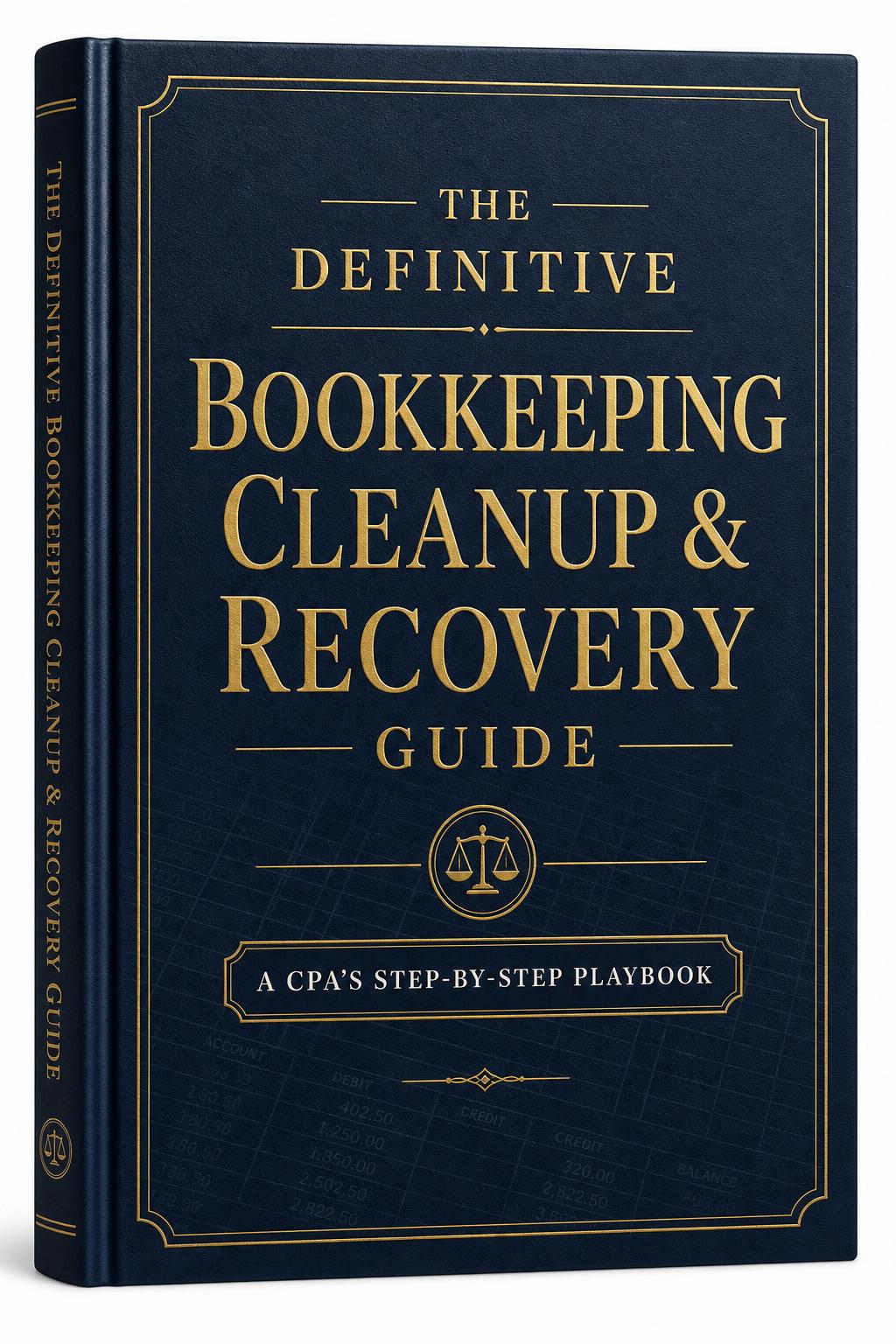
The Definitive Bookkeeping Cleanup & Recovery Guide
The CPA's step-by-step playbook for diagnosing messy books, reconstructing missing history, and restoring a clean, audit-ready ledger.

The Freelancer Tax Guide
The practical tax playbook for freelancers, contractors, and solo creatives — deductions, quarterly estimates, and self-employment strategies.

The Year-End Tax Planning Guide
The CPA's December playbook — practical strategies to reduce your tax bill before the year closes.
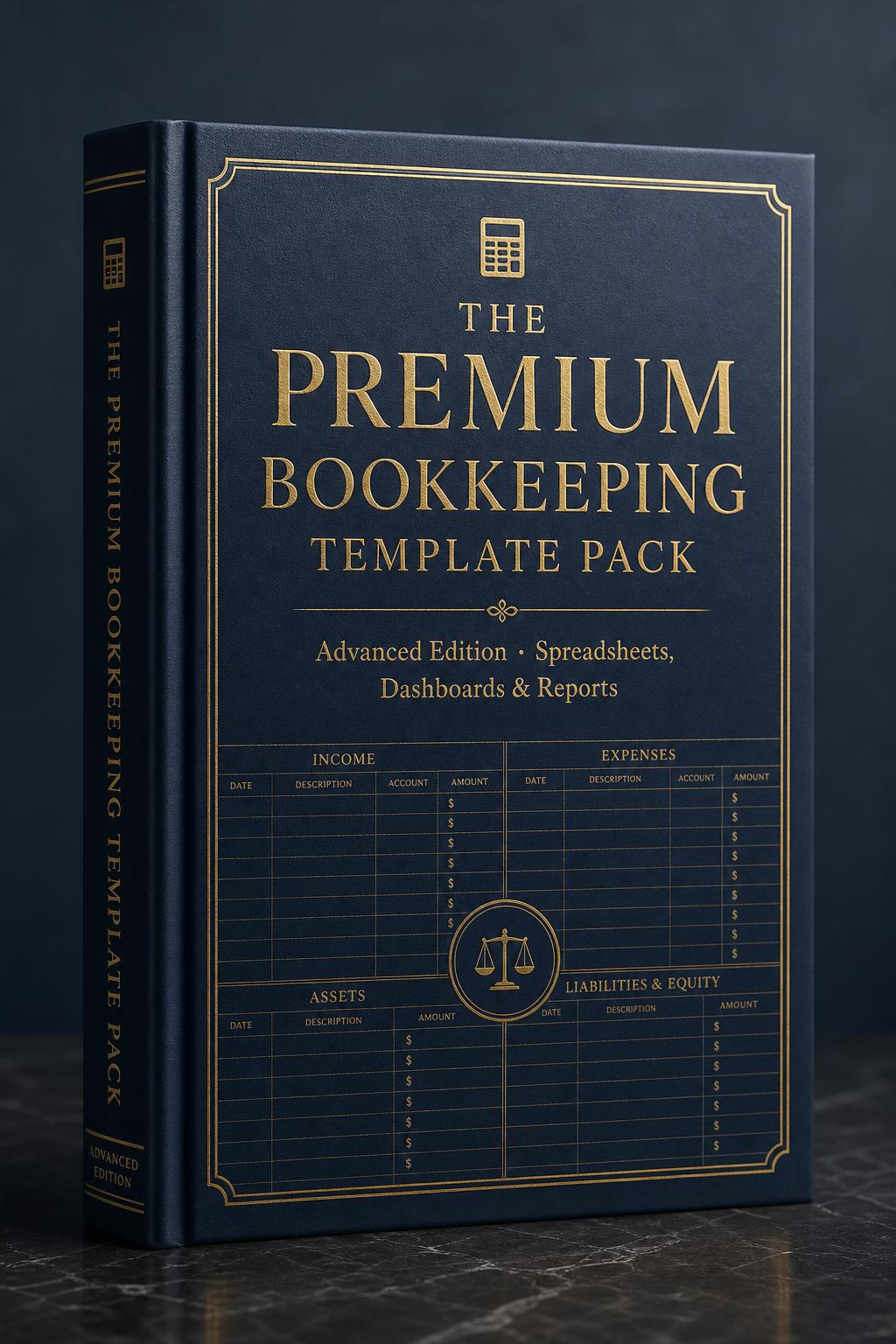
The Premium Bookkeeping Template Pack
Automated dashboards, multi-account reconciliations, and CPA-ready reporting workbooks for serious owners and bookkeepers.

Tax & Bookkeeping Resource Library
Our complete advisor-grade collection — every premium asset an owner needs to run clean books, lower taxes, and recover messy ledgers, in one bundle.