Outsourced Bookkeeping
Accurate Monthly Bookkeeping Without Hiring In-House
Find outsourced bookkeeping services for small businesses, startups, contractors, real estate investors, ecommerce sellers, and growing companies.
Scope
What outsourced bookkeeping services include
A reputable provider handles the full monthly cycle — not just data entry.
- Categorized transactions across every bank, credit card, and merchant account
- Monthly bank, credit-card, and loan reconciliations
- Accurate profit & loss, balance sheet, and cash-flow statements
- Accounts payable and accounts receivable management
- Payroll and contractor (1099) coordination
- Sales-tax tracking and remittance support
- Year-end clean books and CPA tax-prep handoff
- QuickBooks Online or Xero setup, cleanup, and ongoing maintenance
Fit
Who should outsource bookkeeping
Small businesses
Owners who'd rather grow revenue than reconcile accounts every Friday night.
Startups
Founders who need investor-ready books, runway tracking, and clean cap-table-aligned reporting.
Contractors & trades
Job-costing, 1099 vendors, and equipment depreciation tracked monthly.
Real estate investors
Per-property P&Ls, depreciation schedules, and Schedule E-ready books.
Ecommerce sellers
Multi-channel revenue, COGS, inventory, refunds, and marketplace fees reconciled.
Growing companies
Teams scaling past in-house bandwidth that need monthly close in under 10 business days.
Which do you need?
Monthly bookkeeping vs catch-up bookkeeping
Monthly bookkeeping
Ongoing engagement, fixed monthly fee.
- Books closed within 5–10 days of month-end.
- Monthly P&L, balance sheet, and cash-flow.
- Real-time visibility for owners and investors.
- CPA-ready year-end with no surprises.
Catch-up bookkeeping
One-time cleanup project, billed by scope.
- Rebuild months or years of missed books.
- Reconcile every account back to true balances.
- File late returns with accurate numbers.
- Hand off clean books into a monthly plan.
By specialty
Bookkeeping built for your business model
Bookkeeping for startups
Investor-ready books on accrual or GAAP, deferred revenue, R&D capitalization (Section 174), equity expense, and burn-rate dashboards your board will actually read.
Bookkeeping for real estate investors
Property-level P&Ls, mortgage interest splits, depreciation schedules, capital improvements vs. repairs, and clean Schedule E exports for your CPA.
Bookkeeping for ecommerce businesses
A2X-style reconciliations for Shopify, Amazon, Stripe, and PayPal — gross sales, fees, refunds, COGS, and inventory tracked the way your tax preparer wants to see them.
Bookkeeping for trucking companies
Per-truck P&Ls, IFTA-friendly fuel tracking, per-diem documentation, and factoring reconciliations built for owner-operators and small fleets.
Pricing
How much outsourced bookkeeping costs
Most U.S. small businesses pay $200–$3,500/month depending on transaction volume, account count, and whether books are accrual or cash.
Essential
$200 – $500 / mo
Up to ~100 monthly transactions, single bank account, cash-basis books, quarterly statements.
Growth
$500 – $1,200 / mo
Up to ~500 transactions, multiple accounts, monthly close, AP/AR support, sales-tax tracking.
CFO Ready
$1,200 – $3,500+ / mo
High volume, accrual books, class/department tracking, controller-level review, CFO-ready reporting.
Due diligence
Questions to ask before hiring
What accounting software do you use, and will I own the file?+
Most outsourced bookkeepers work in QuickBooks Online or Xero. Confirm you'll be the primary account owner so you keep full access if you ever switch providers.
How long does monthly close take?+
A well-run outsourced bookkeeper closes the prior month in 5–10 business days. Anything longer makes the data too stale for real decisions.
How do you price — flat fee, hourly, or by transaction volume?+
Most reputable firms quote a flat monthly fee scoped to transaction volume, account count, and accrual vs. cash. Hourly billing is fine for cleanup, but ongoing work should be predictable.
Can you clean up months or years of behind-the-books work?+
Yes — this is called catch-up or cleanup bookkeeping and is usually billed as a one-time project before the recurring monthly engagement starts.
Do you coordinate with my CPA at tax time?+
Good outsourced bookkeepers package year-end financials, depreciation schedules, and reconciliations the way your CPA wants them, and answer follow-ups during filing season.
How do you protect my financial data?+
Look for SOC 2 alignment, MFA on every login, role-based access in QuickBooks/Xero, and encrypted document portals — never email attachments for sensitive statements.
Can I see references from clients in my industry?+
Yes. Ask for 2–3 references in your industry and revenue band before signing. A specialist who already serves businesses like yours will ramp far faster.
What happens if my volume or scope changes?+
Your contract should include a clear re-scope cadence (typically quarterly) so pricing tracks transaction volume and added entities instead of surprising you mid-year.
Local
Find outsourced bookkeepers near you
Ready to hand off the books?
Get matched with a verified bookkeeper that fits your industry and software.
Vetting checklist
Questions to ask an outsourced bookkeeping firm
- 1What software do you support, and do you handle migrations or cleanup?
- 2Who on your team will own my account day to day?
- 3What's your monthly close timeline and deliverable pack?
- 4How do you handle sales tax, payroll posting, and 1099s?
- 5What does pricing look like as my transaction volume grows?
Featured Professionals
Featured bookkeepers and firms
Verified professionals will appear here as profiles are claimed and reviewed.
Keep exploring
Related services
Monthly bookkeeping
Recurring monthly close with reconciliations and reports.
Virtual bookkeepers
Remote bookkeepers serving clients in any state.
QuickBooks ProAdvisors
Certified ProAdvisors for setup, cleanup, and training.
Small business payroll
Multi-state payroll and 1099 processing.
Tax planning services
Year-round planning paired with clean books.
Fractional CFO services
Strategic finance leadership for growing businesses.
By city
Find this service by city
Houston, TX
Houston CPAs serve energy, healthcare, and the city's vast small-business community.
Dallas, TX
Dallas accounting firms anchor finance, real estate, and corporate headquarters across DFW.
Los Angeles, CA
LA's accountants specialize in entertainment, real estate, and creative-industry tax planning.
San Francisco, CA
San Francisco CPAs serve startups, venture-backed companies, and complex equity-comp clients.
New York City, NY
NYC's accountants cover Wall Street, media, real estate, hospitality, and the small businesses of all five boroughs.
Miami, FL
Miami's CPAs specialize in international tax, real estate, hospitality, and Latin American business.
Chicago, IL
Chicago accountants serve professional services, manufacturing, logistics, and the Midwest's largest corporate base.
Atlanta, GA
Atlanta's CPAs support film, fintech, logistics, and one of the country's most dynamic small-business scenes.
Boston, MA
Boston-area accountants serve life sciences, higher education, financial services, and innovation-economy startups.
Seattle, WA
Seattle CPAs serve tech, aerospace, and the Pacific Northwest's deep entrepreneurial bench.
Washington DC, DC
Washington DC accountants serve federal contractors, nonprofits, associations, and the law firms that anchor the capital's economy.
Baltimore, MD
Baltimore CPAs serve healthcare systems, port and logistics operators, biotech, and the city's deep nonprofit and higher-ed community.
Advisor-grade guides
Downloadable ebooks & templates
CPA-ready playbooks and templates you can use today — instant downloads, no signup required.

The Small Business Tax & Profit Playbook
A CPA-ready guide to deductions, quarterly taxes, S-Corp strategy, owner pay, cash flow, and year-round tax planning.

Business Tax Deduction Checklist
A CPA-curated checklist of 80+ business deductions most owners miss — organized by category so you can sweep it before filing.
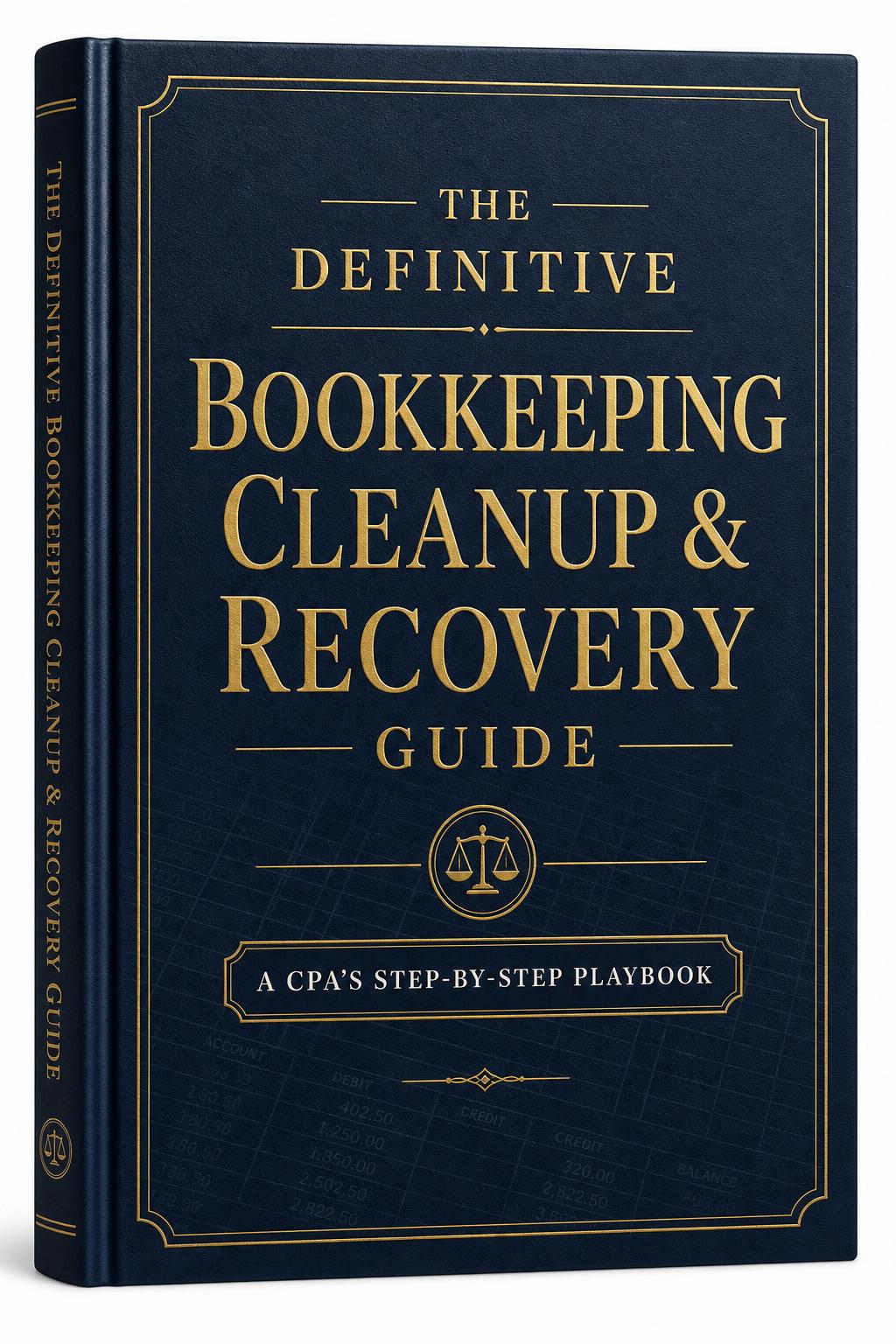
The Definitive Bookkeeping Cleanup & Recovery Guide
The CPA's step-by-step playbook for diagnosing messy books, reconstructing missing history, and restoring a clean, audit-ready ledger.

The Freelancer Tax Guide
The practical tax playbook for freelancers, contractors, and solo creatives — deductions, quarterly estimates, and self-employment strategies.

The Year-End Tax Planning Guide
The CPA's December playbook — practical strategies to reduce your tax bill before the year closes.
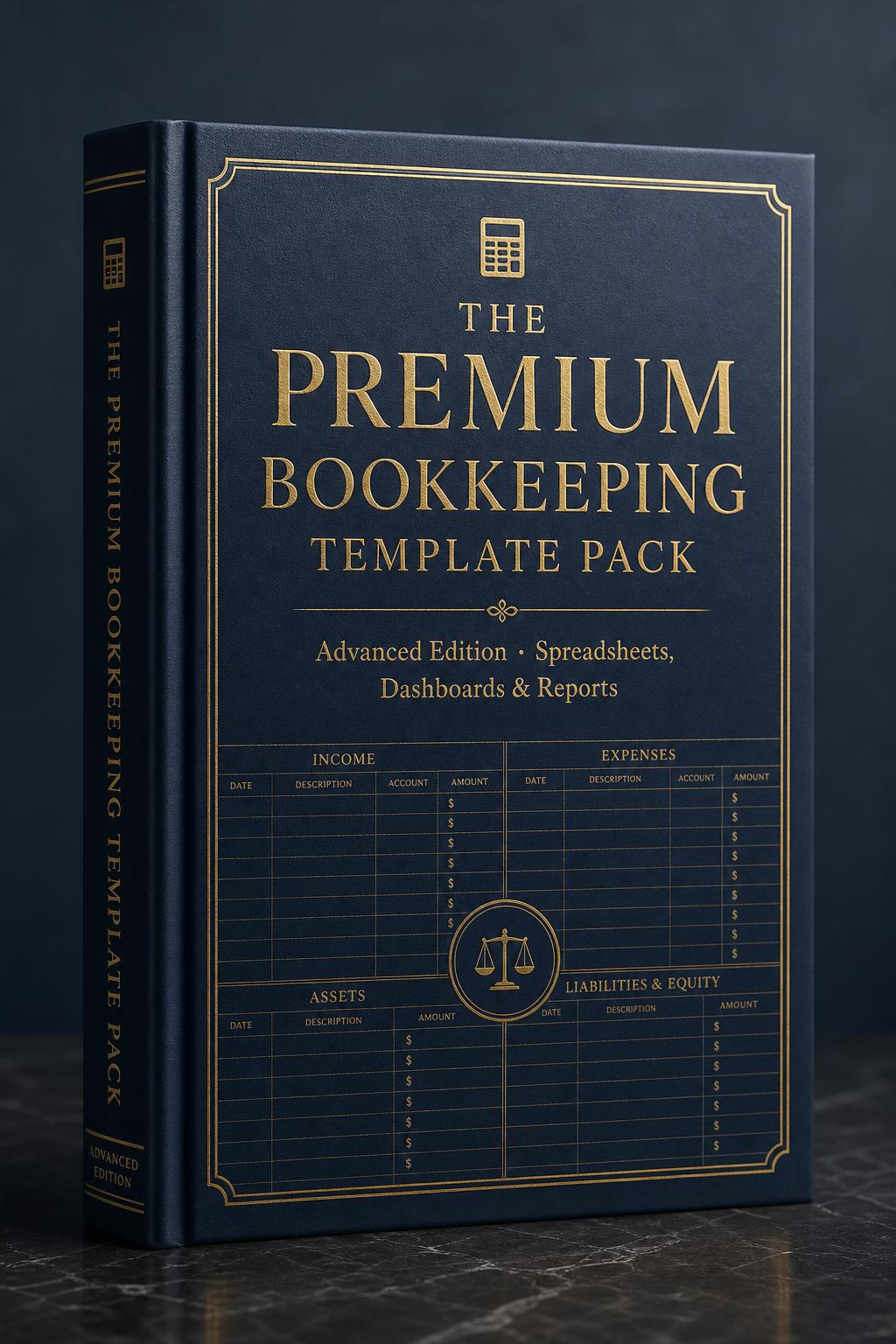
The Premium Bookkeeping Template Pack
Automated dashboards, multi-account reconciliations, and CPA-ready reporting workbooks for serious owners and bookkeepers.

Tax & Bookkeeping Resource Library
Our complete advisor-grade collection — every premium asset an owner needs to run clean books, lower taxes, and recover messy ledgers, in one bundle.