Hiring · 7 min read

When Should a Startup Hire a CPA?

Most founders wait too long to hire a CPA. The cost of a missed R&D credit, a botched 83(b) election, or a late state registration usually dwarfs a year of CPA fees. Here are the trigger events that mean it's time.

Hire a CPA when any of these happen

  • You incorporate (Delaware C-Corp, LLC, or otherwise)
  • You issue founder equity or grant employee options
  • You raise outside capital (friends/family, SAFE, priced round)
  • You hire your first employee
  • You open bank or credit accounts under the company name
  • You generate revenue in a state where you don't live
  • You qualify for R&D, QSBS, or other startup-specific credits

What a startup CPA does in year one

  • Files the 83(b) election within 30 days of equity grant
  • Sets up the chart of accounts with investor-grade categories
  • Registers the company for state withholding and franchise taxes
  • Files initial annual reports and Delaware franchise tax
  • Tracks R&D expenditures for the federal R&D credit
  • Issues 1099s and prepares the first 1120/1120-S return

Costs to expect

  • Entity setup support: $500–$2,000 one-time
  • Monthly bookkeeping: $400–$1,500
  • Annual tax prep (1120 or 1120-S): $1,500–$3,500
  • Delaware franchise + annual report filings: $300–$600
  • R&D credit study: $3,000–$10,000 (paid out of credit recovered)
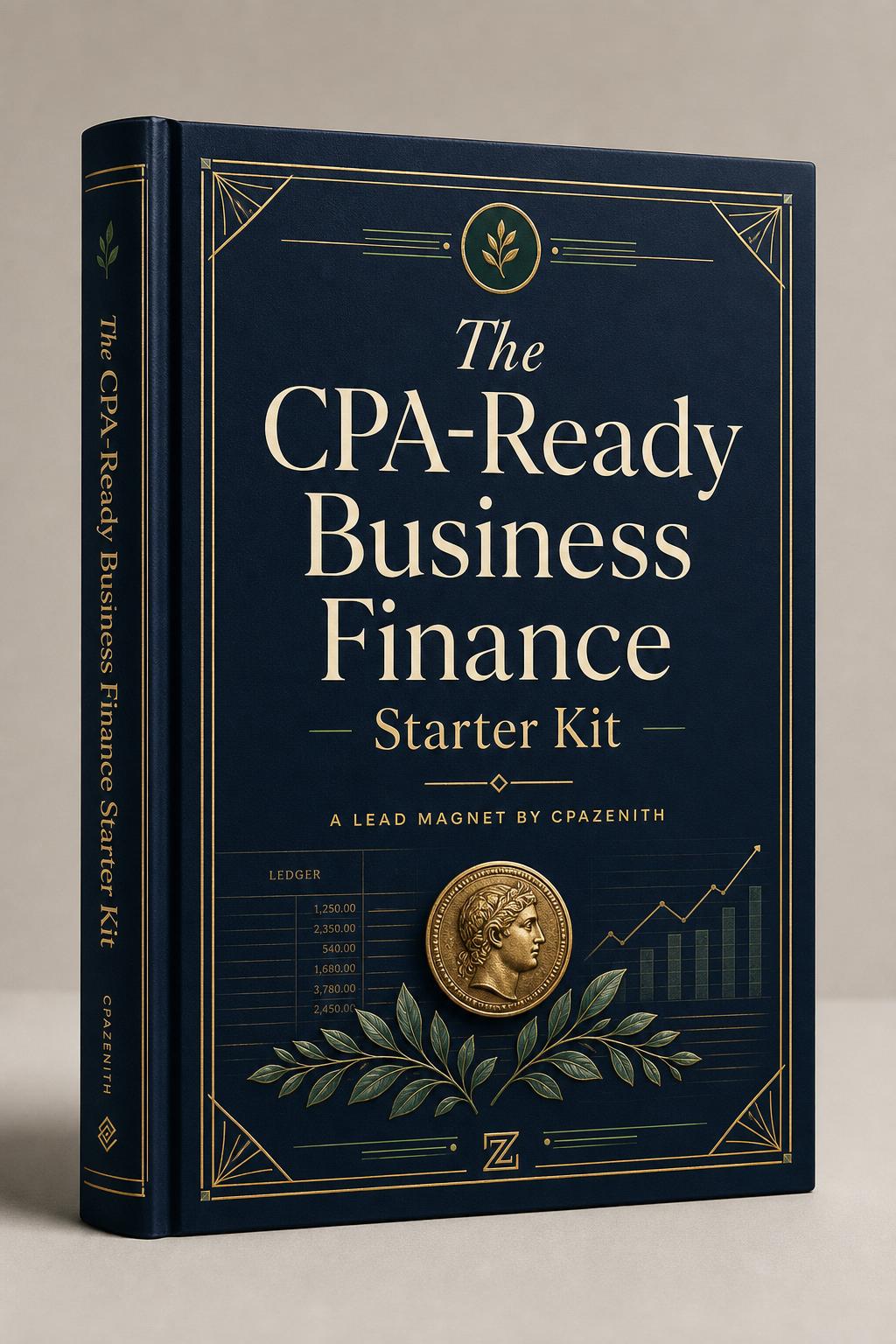
The CPA-Ready Business Finance Starter Kit cover

Free download

The CPA-Ready Business Finance Starter Kit

A practical, advisor-grade workbook for owners and founders — the foundations your CPA wishes every client showed up with. Books, taxes, cash flow, and entity decisions, in one place.

  • Monthly bookkeeping rhythm
  • Tax-ready document checklist
  • Entity & S-Corp decision guide
  • Cash flow & owner pay basics

No signup required. Informational only — consult your CPA for advice.

Ready for the next step?

See the full Lead-Magnet Funnel — from free checklist to advisor-grade systems.

Open the funnel

Founder tax issues a CPA prevents

The 83(b) deadline is 30 days from grant — no extensions, no exceptions. QSBS qualification depends on the company being a C-Corp at issuance. Reasonable compensation for S-Corp founders becomes an IRS focus once revenue picks up. Every one of these gets harder to fix retroactively than to do correctly the first time.

What about pre-revenue startups?

Even pre-revenue, you need to file zero-revenue returns, Delaware franchise reports, and any state-level minimum taxes. A few hours of CPA time per year is enough until you hit the trigger events above.

Frequently asked

Can I just use TurboTax for now?

For a sole-proprietor side project, maybe. The moment you incorporate, issue equity, or take outside capital, you're outside TurboTax's lane.

What about Pilot, Bench, or other startup-focused services?

They're great at monthly bookkeeping and basic tax prep. Most founders still need a CPA for one-off issues like 83(b), QSBS, R&D credits, or fundraising-stage tax planning.

How do I find a startup-savvy CPA?

Look for firms that explicitly list startups as an industry and have venture-backed clients. Ask about R&D credits and 83(b) handling specifically.

What does a startup CPA cost in year one?

Budget $5,000–$15,000 total across bookkeeping, tax prep, and entity filings for a pre-revenue or early-revenue company.

When do I need a fractional CFO instead?

Usually when you raise institutional capital or cross $1M ARR. Until then, a CPA + bookkeeper is enough.

Next step

Need a real human? Find a verified CPA in your city.