Hiring · 7 min read

CPA vs Accountant vs Bookkeeper vs Tax Preparer

These four titles get used interchangeably, but they aren't the same. The right hire depends on whether you need someone to record transactions, prepare reports, file taxes, or sign attestation work. Hiring up — or down — costs you money either way.

Bookkeeper

A bookkeeper records day-to-day transactions, reconciles bank accounts, manages accounts payable and receivable, and produces basic monthly reports. Most bookkeepers are not licensed; they may hold a QuickBooks ProAdvisor cert or an AIPB credential.

  • Records transactions in QuickBooks/Xero
  • Reconciles accounts monthly
  • Runs A/P and A/R
  • Produces P&L and balance sheet
  • Typical rate: $30–$80/hr or $300–$1,200/mo

Accountant (non-CPA)

An accountant typically holds a bachelor's degree in accounting and can prepare more complex financial statements, set up your chart of accounts, and handle internal controls — but cannot sign attest work or represent you before the IRS unless they're also an EA.

  • Designs chart of accounts
  • Prepares GAAP-style financial statements
  • Handles cost accounting and inventory
  • Cannot sign audit/review reports
  • Typical rate: $50–$150/hr

Tax preparer

Anyone with a PTIN can prepare returns for compensation. Many are seasonal. Enrolled Agents (EAs) are tax preparers licensed by the IRS and can represent clients in IRS proceedings, but cannot sign attest work. Use a tax preparer for straightforward returns where you don't need year-round planning.

  • Files annual federal and state returns
  • EAs can represent clients before the IRS
  • Limited or no planning between filing seasons
  • Typical fee per return: $200–$1,500
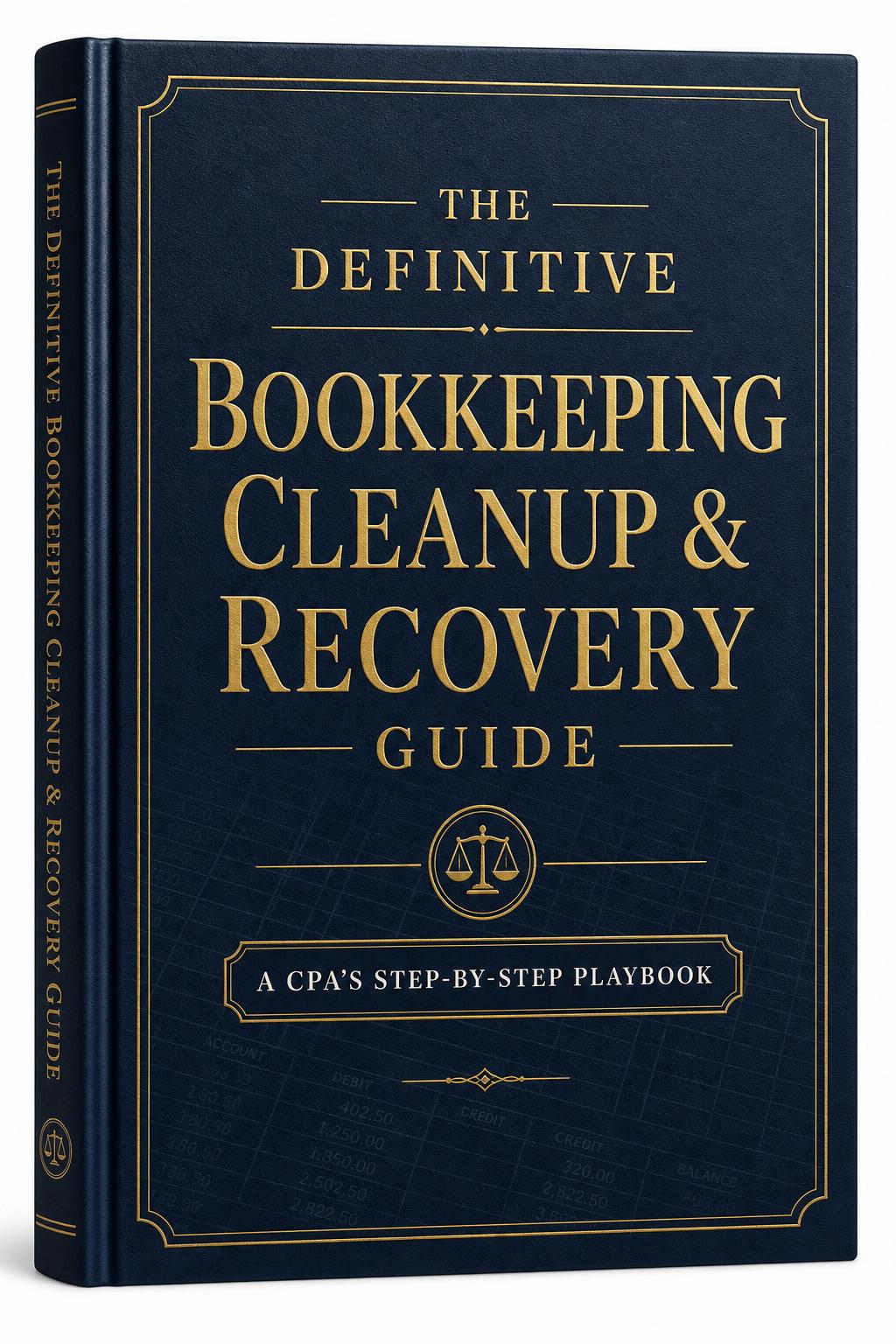
The CPA-Ready Business Finance Starter Kit cover

Free download

The CPA-Ready Business Finance Starter Kit

A practical, advisor-grade workbook for owners and founders — the foundations your CPA wishes every client showed up with. Books, taxes, cash flow, and entity decisions, in one place.

  • Monthly bookkeeping rhythm
  • Tax-ready document checklist
  • Entity & S-Corp decision guide
  • Cash flow & owner pay basics

No signup required. Informational only — consult your CPA for advice.

Ready for the next step?

See the full Lead-Magnet Funnel — from free checklist to advisor-grade systems.

Open the funnel

CPA (Certified Public Accountant)

A CPA is licensed by a state board, has 150 hours of accounting education, has passed the four-part Uniform CPA Exam, and meets experience requirements. CPAs can sign attestation work (audits, reviews, compilations), represent clients before the IRS in any matter, and are bound by AICPA ethics.

  • Files complex returns and handles audits
  • Signs audit, review, and compilation reports
  • Provides tax planning and advisory
  • Represents you in IRS audits and appeals
  • Typical rate: $150–$600/hr

Which one do you need?

  • Just need books kept current → bookkeeper
  • Need books + management reporting → accountant or controller-level bookkeeper
  • Need a simple return filed → tax preparer or EA
  • Need planning, audits, attestation, or IRS representation → CPA
  • Most growing businesses use a stack: bookkeeper + CPA, sometimes plus a fractional CFO

Frequently asked

Can a bookkeeper file my taxes?

Only if they also hold a PTIN. Most don't file beyond simple returns and will hand off to a CPA or EA for filings.

Is an EA as good as a CPA for taxes?

For tax-only work, yes. EAs are tax specialists licensed by the IRS. CPAs cover a broader scope including attest work and financial statement assurance.

Do I need a CPA if I'm a sole proprietor?

Not necessarily. A solo Schedule C can be handled by a good EA or tax preparer. A CPA becomes valuable when you elect S-Corp, add employees, or have multi-state activity.

Why are CPAs more expensive?

Licensing, continuing education (40+ hours/year), liability insurance, and the broader scope of work they're qualified to handle.

Can one person be all four?

Yes — many CPA firms employ bookkeepers and offer the full stack. The titles describe roles, not exclusive people.

Next step

Need a real human? Find a verified CPA in your city.