Free checklist
Startup Accounting Checklist
The stage-by-stage finance setup founders use from incorporation through Series A — entity, bookkeeping, payroll, tax, R&D credit, and investor-ready reporting.
Stage
Pre-incorporation
- Decide Delaware C-corp vs. LLC (default to Delaware C-corp if raising priced equity)
- Reserve a clean legal name and secure the matching domain + handles
- Open a business bank account and a business credit card (never co-mingle)
- Set up a US EIN with the IRS before opening accounts
- Get a registered agent in Delaware
Stage
Day one (post-incorporation)
- Issue founder stock and file 83(b) elections within 30 days
- Sign IP assignment agreements with every founder and early contractor
- Set up QuickBooks Online or Xero with a startup chart of accounts
- Set up Stripe / merchant processing with a business bank account
- Set up AP workflow with Bill.com, Ramp, or Brex
- Document a corporate calendar (Delaware franchise, 1120, sales tax, payroll)
Stage
First hires & first dollars
- Set up payroll (Gusto, Rippling, or Deel) and put founders on payroll
- Register state withholding, SUI, and workers' comp in every employee state
- Classify workers correctly (W-2 vs. 1099) and onboard 1099s with W-9s
- Set up Carta or Pulley for cap table and equity grants
- Switch books to accrual basis with ASC 606 revenue recognition
- Map sales-tax nexus before crossing economic-nexus thresholds
Stage
Seed round closed
- Engage a startup CPA for monthly close, tax, and R&D credit
- Stand up monthly KPI pack (P&L, balance sheet, cash flow, burn, runway)
- Set up board reporting cadence (typically monthly or every other month)
- File federal Form 1120 and Delaware franchise (assumed-par method)
- File Form 6765 + Form 8974 for the R&D payroll-tax credit
- Document a sales-tax registration plan for nexus states
- Open a high-yield treasury account for cash above operating runway
Stage
Series A readiness
- Tighten monthly close to 10 business days
- Reconcile cap table to issued securities and 409A valuations
- Prepare a diligence data room: financials, contracts, tax, IP, cap table
- Engage a fractional CFO for the raise (forecast, model, board narrative)
- Implement SOC 2 controls if selling to enterprise customers
- Plan first audit (typically required after Series B)
FAQ
About the checklist
When should a founder start using this checklist?+
Before incorporating, if possible. Most expensive startup-finance mistakes (entity choice, missed 83(b), no R&D credit) happen in the first 90 days.
Do I need to hit every item to raise a seed round?+
No — but you should hit every item in the first three stages. Investors expect clean books, payroll set up, and a Delaware C-corp in good standing before they wire.
What does this cost to implement?+
Software stack typically runs $200–$600/month. A startup CPA retainer for a pre-seed company is usually $400–$1,500/month. Both are cheap relative to what a single missed R&D credit costs.
Can I do this checklist myself?+
The first two stages, yes. Once you have payroll, equity, or revenue, the time cost of DIY almost always exceeds hiring a startup accounting firm.
Startup cluster
Explore related startup guides
CPA for Startups
Hub: find startup CPAs and accounting firms.
Read guideStartup Accounting Services
Monthly close, reporting, and advisory for startups.
Read guideStartup Bookkeeping Services
Accrual books, ASC 606, and Stripe / Shopify clean-up.
Read guideStartup Payroll Services
Gusto, Rippling, Deel, equity comp, multi-state.
Read guideStartup Tax Planning
Delaware franchise, §174, R&D credit, QSBS.
Read guideCPA for SaaS Startups
ASC 606, MRR/ARR, NRR, Rule of 40.
Read guideCPA for Tech Startups
Marketplace, hardware, AI, fintech tax and books.
Read guideCPA for Funded Startups
Audit prep, 409A, board reporting, fractional CFO.
Read guide
Get the PDF
Startup CPA-Ready Finance Checklist
A founder's checklist for bookkeeping, payroll, tax planning, financial statements, and investor-ready accounting — what your CPA wishes you had before your next close, board meeting, or fundraise.
- Bookkeeping foundations & monthly close
- Payroll, equity comp & 1099 workflow
- Tax planning: §174, R&D credit, QSBS
- Investor-ready statements & KPI pack
Find a Startup CPA
Browse vetted CPAs and accounting firms that already serve venture-backed and high-growth startups.
Find a Startup CPAStartup Accounting Checklist
The stage-by-stage finance setup founders use from incorporation through Series A — bookkeeping, payroll, tax, and reporting.
Download the ChecklistAdvisor-grade guides
Downloadable ebooks & templates
CPA-ready playbooks and templates you can use today — instant downloads, no signup required.
The Small Business Tax & Profit Playbook
A CPA-ready guide to deductions, quarterly taxes, S-Corp strategy, owner pay, cash flow, and year-round tax planning.
Business Tax Deduction Checklist
A CPA-curated checklist of 80+ business deductions most owners miss — organized by category so you can sweep it before filing.
The Definitive Bookkeeping Cleanup & Recovery Guide
The CPA's step-by-step playbook for diagnosing messy books, reconstructing missing history, and restoring a clean, audit-ready ledger.

The Freelancer Tax Guide
The practical tax playbook for freelancers, contractors, and solo creatives — deductions, quarterly estimates, and self-employment strategies.

The Year-End Tax Planning Guide
The CPA's December playbook — practical strategies to reduce your tax bill before the year closes.
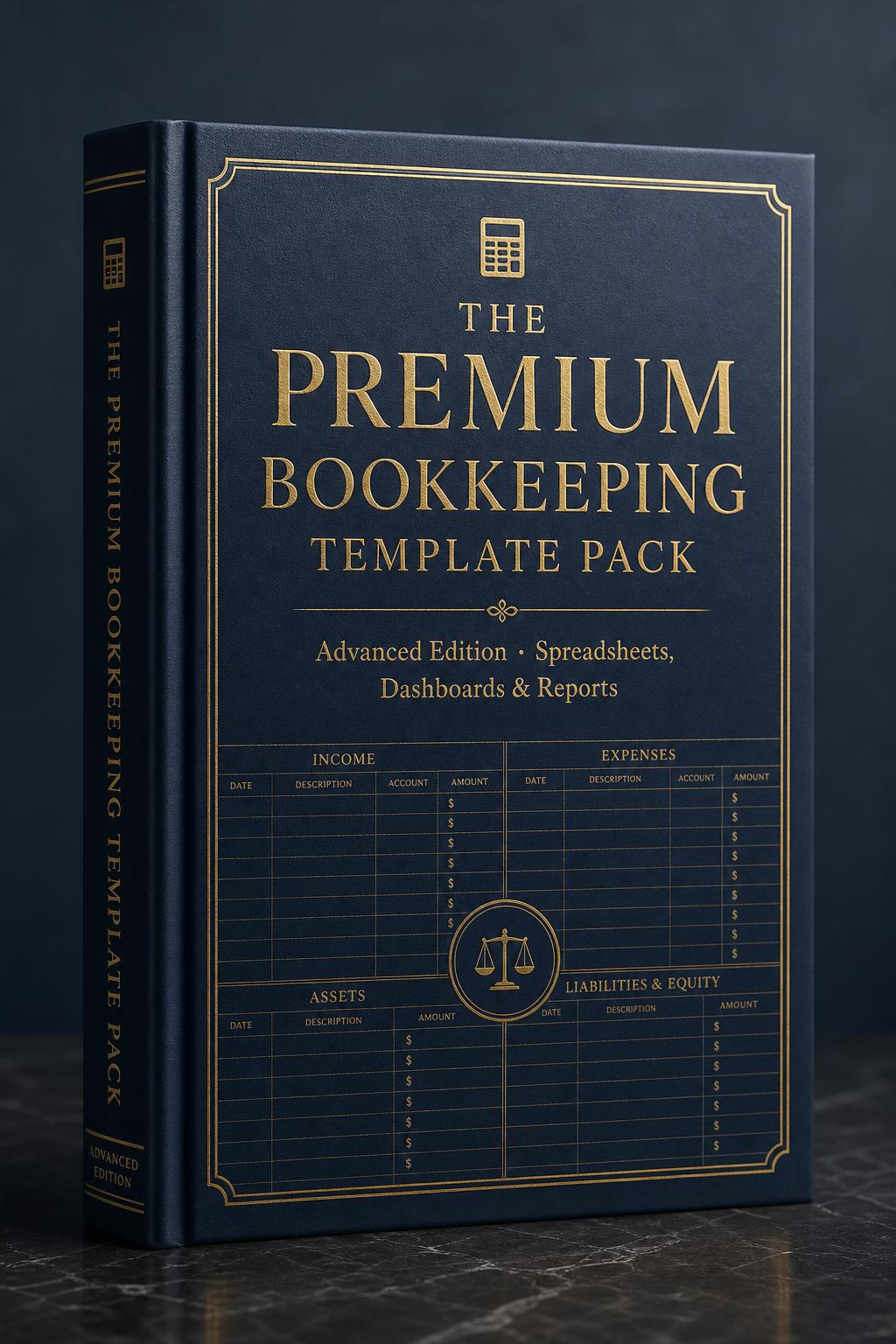
The Premium Bookkeeping Template Pack
Automated dashboards, multi-account reconciliations, and CPA-ready reporting workbooks for serious owners and bookkeepers.
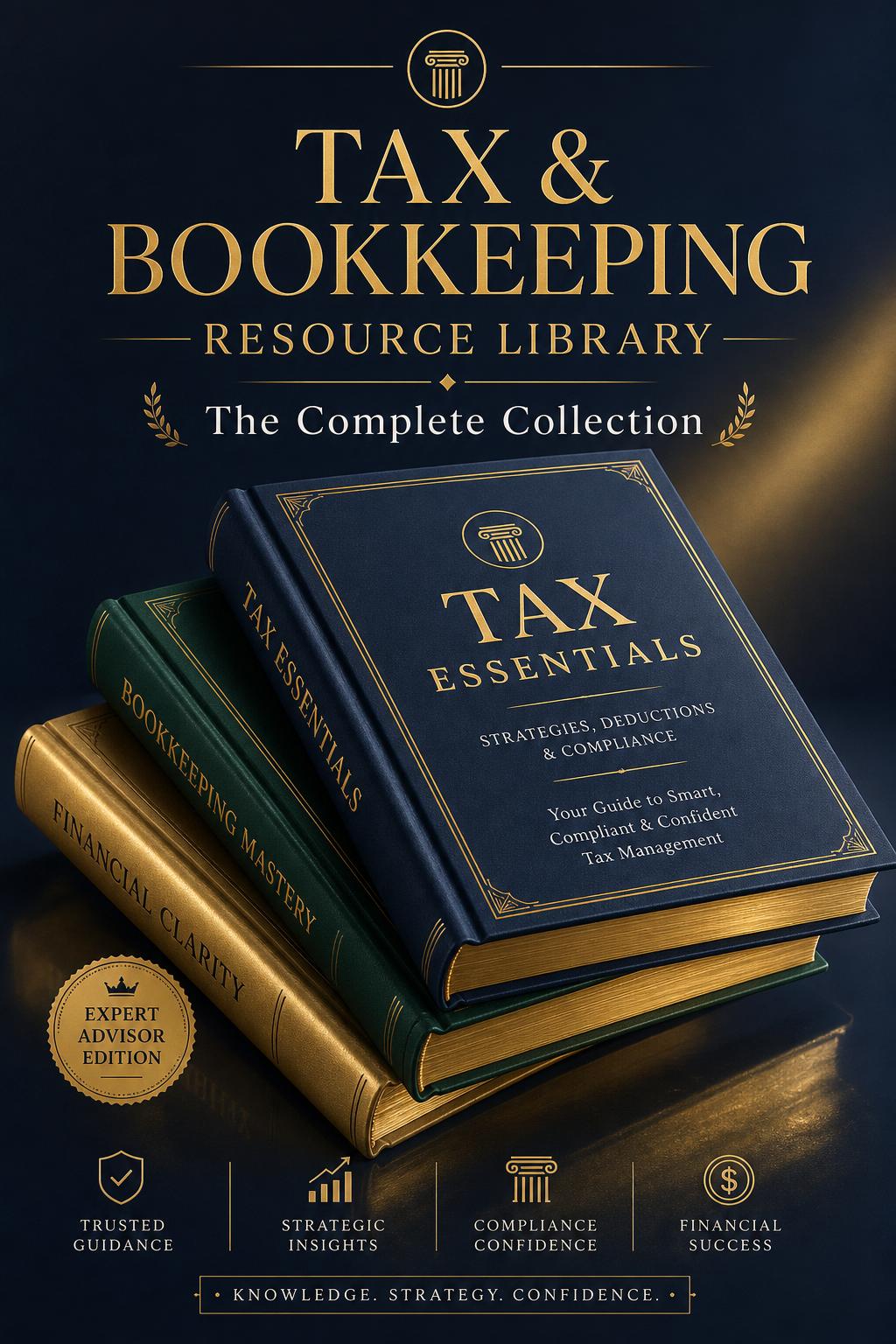
Tax & Bookkeeping Resource Library
Our complete advisor-grade collection — every premium asset an owner needs to run clean books, lower taxes, and recover messy ledgers, in one bundle.