Bookkeeping · 6 min read

How to Reconcile Bank Accounts

Reconciliation is the single most important monthly habit in bookkeeping. It's how you prove the books match reality — and it's the first thing a CPA checks.

What reconciliation actually proves

A reconciliation confirms that every transaction the bank recorded is in your books, and every transaction in your books actually cleared the bank. If they don't tie, the financials are wrong — full stop.

The monthly workflow

  • Download the bank statement for the period (calendar month)
  • Open the matching account in your bookkeeping software
  • Enter the ending statement date and ending balance
  • Check off each transaction that appears on both sides
  • Confirm the difference is $0 before closing

Common reasons it doesn't reconcile

  • Transactions entered twice (duplicates)
  • A deposit or payment missing from the books
  • Wrong amount entered (transposed digits)
  • Wrong date — transaction is in a different period
  • Manual journal entry posted to the bank account by mistake
  • Prior month was force-balanced — the error rolls forward
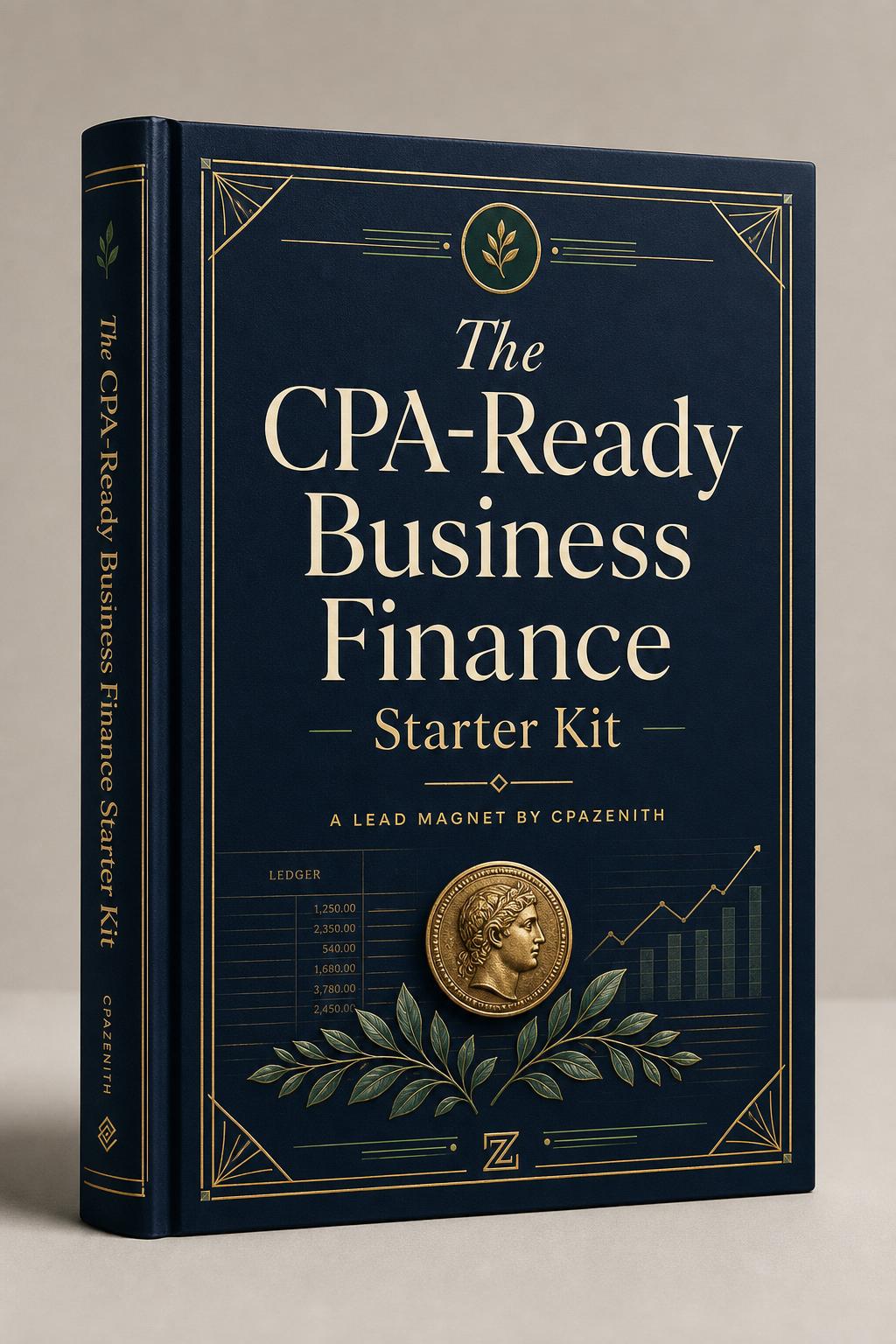
The CPA-Ready Business Finance Starter Kit cover

Free download

The CPA-Ready Business Finance Starter Kit

A practical, advisor-grade workbook for owners and founders — the foundations your CPA wishes every client showed up with. Books, taxes, cash flow, and entity decisions, in one place.

  • Monthly bookkeeping rhythm
  • Tax-ready document checklist
  • Entity & S-Corp decision guide
  • Cash flow & owner pay basics

No signup required. Informational only — consult your CPA for advice.

Ready for the next step?

See the full Lead-Magnet Funnel — from free checklist to advisor-grade systems.

Open the funnel

Reconcile credit cards and merchant accounts too

Every account with its own statement gets its own reconciliation: credit cards, lines of credit, loans, Stripe, Square, PayPal. Each one is a separate trust-but-verify checkpoint.

Lock the period when you're done

  • Set a closing date in your software to prevent backdated edits
  • Save a PDF of the reconciliation report with the statement
  • Add reconciliation date to your monthly close checklist

Frequently asked

How often should I reconcile?

Monthly, ideally within a week of the statement date. Quarterly or annual reconciliations almost always uncover errors that are painful to track down.

What if I can't get to $0?

Don't force-balance with a plug entry. Work backward through the period and check the prior reconciliation. A small unresolved difference usually means a duplicate or a missing entry, not a math error.

Recommended next step

Download the Bookkeeping Template Pack or Bookkeeping Cleanup Guide

Two CPA-built resources behind every guide in this cluster — pick the templates if your books are current, or the cleanup guide if you're catching up.

Bookkeeping Template Pack

Automated P&L, balance sheet, cash flow & reconciliations

Bookkeeping Cleanup Guide

Step-by-step playbook to fix messy or behind books

Next step

Need a real human? Find a verified CPA in your city.