Tax · 6 min read

Self-Employment Tax Explained

Self-employment tax is the single biggest surprise for new freelancers. It's a separate tax on net profit — on top of income tax — and it's the price of being your own employer.

What the 15.3% actually is

  • 12.4% for Social Security (on wages up to the annual wage base)
  • 2.9% for Medicare (no cap)
  • Additional 0.9% Medicare surtax on earnings above $200K single / $250K joint
  • Together: the same payroll taxes a W-2 job splits between employer and employee — you pay both halves

How it's calculated

SE tax applies to 92.35% of your net self-employment income (Schedule C profit, plus any K-1 SE earnings). You report it on Schedule SE and add it to your 1040.

The CPA-Ready Business Finance Starter Kit cover

Free download

The CPA-Ready Business Finance Starter Kit

A practical, advisor-grade workbook for owners and founders — the foundations your CPA wishes every client showed up with. Books, taxes, cash flow, and entity decisions, in one place.

  • Monthly bookkeeping rhythm
  • Tax-ready document checklist
  • Entity & S-Corp decision guide
  • Cash flow & owner pay basics

No signup required. Informational only — consult your CPA for advice.

Ready for the next step?

See the full Lead-Magnet Funnel — from free checklist to advisor-grade systems.

Open the funnel

The deduction that softens the blow

You get to deduct half of your SE tax as an above-the-line adjustment on Schedule 1. It doesn't reduce SE tax itself — only your income tax — but it's automatic and material.

How S-Corp election changes SE tax

Inside an S-Corp, only the wages you pay yourself are subject to payroll taxes. Distributions on top of a reasonable salary avoid SE tax — which is the entire point of the election. The IRS scrutinizes salaries that look unreasonably low.

Frequently asked

Do I owe SE tax if I take a loss?

No. SE tax applies only to net profit. A Schedule C loss doesn't create SE tax — but it can reduce other income.

Is SE tax in addition to income tax?

Yes. SE tax and income tax are separate. Freelancers should plan for the combined total when setting aside taxes — often 25–35% of net profit.

Recommended next step

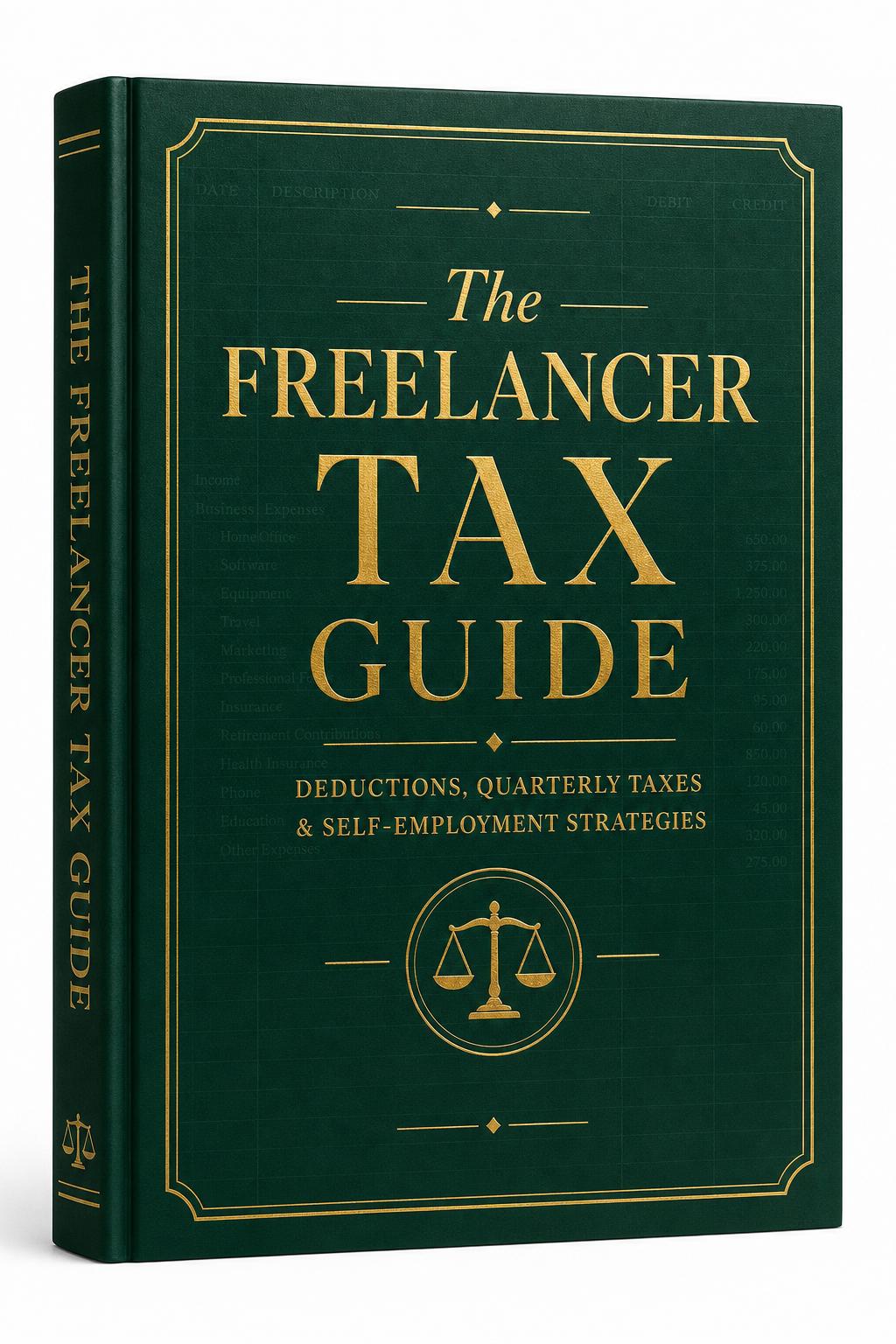
Download the Freelancer Tax Guide

The practical tax playbook for freelancers and 1099 contractors — self-employment tax, quarterly estimates, deductions, retirement, and audit-proof records in one PDF.

Next step

Need a real human? Find a verified CPA in your city.